The surgeon knows the moment something changes The discharge summary is built from the whole stay.
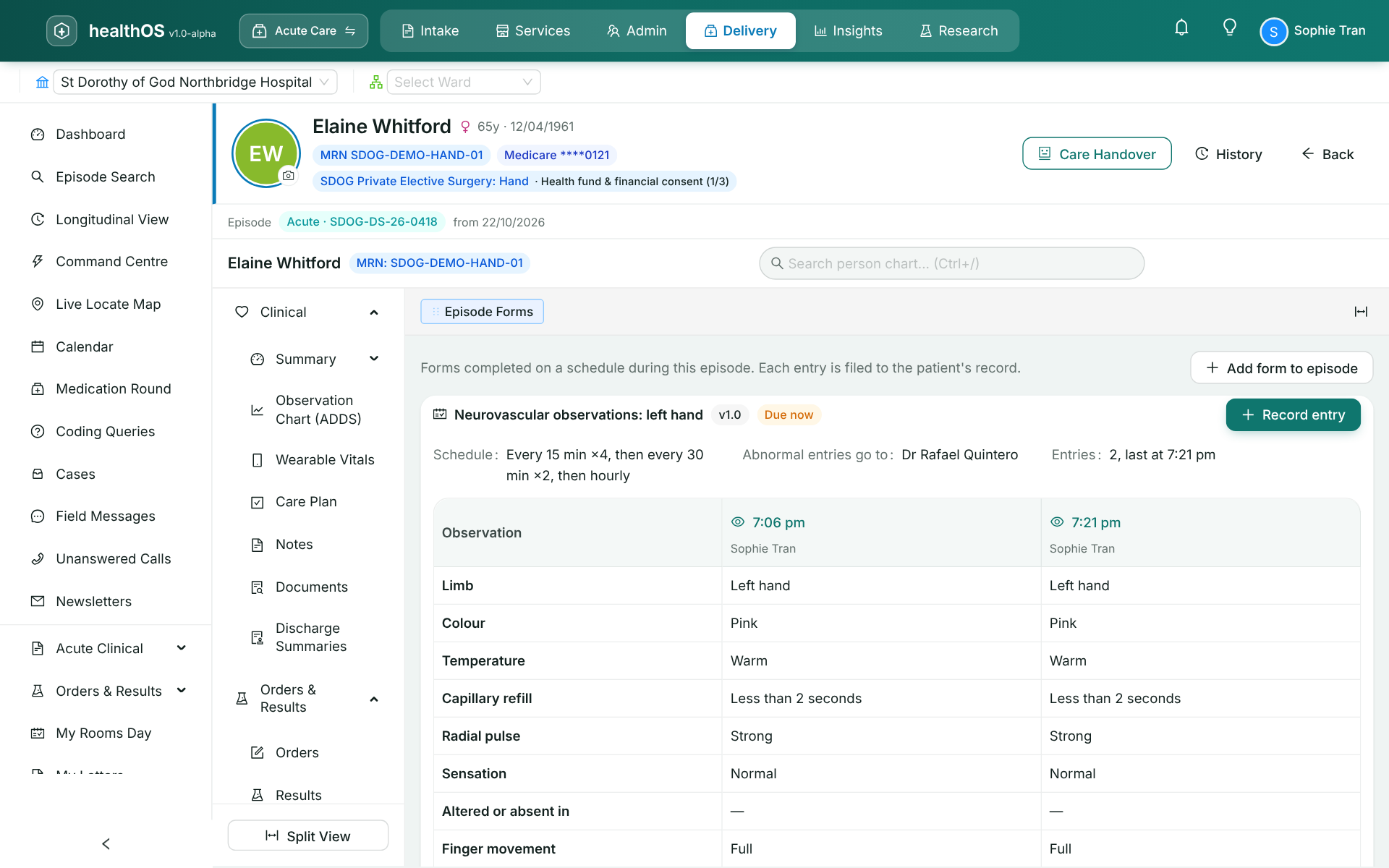
- Observations on schedule. The surgeon's orders become a schedule on the episode, and an abnormal entry goes straight to them.
- Handover drafted from the record. It is in ISBAR form, alerts first, for a clinician to check before it is shared.
- Discharge without the fax. When the next provider is on HealthOS too, they get a structured referral and the hospital can see the person picked up.
Everyone works from the same patient
Records each observation when it falls due. After a hand operation that is neurovascular observations every fifteen minutes at first, then less often.
Is told the moment an entry comes back abnormal, without waiting for a phone call.
Gets a handover drafted from the record for them to check and edit, alerts first.
If they also work on HealthOS, gets the discharge as a structured referral, and the hospital can see the person picked up.
Step by step
- A schedule on the episode
The observation form is scheduled on the episode, and the ward sees which entry is due next.
- An abnormal answer escalates
An answer outside the form's normal range goes to the person named on the schedule.
- Handover
A care handover in ISBAR form is drafted from the record for a clinician to review before it is shared.
- The discharge summary
Diagnoses, procedures, medicines and follow-up come from what was recorded during the stay.
- Home, or onward care
When the receiving provider also works on HealthOS, a referral to home care, aged care or allied health goes as a structured handoff instead of a fax.
Each step starts from the last
From the step before. The ward receives the patient with the operation, anaesthetic and recovery already on the record.
To the next step. Coding gets a complete episode: what the patient arrived with, what was done, and what was handed on.
See what changes for your hospital
We will walk you through it on real data. Bring the hardest thing your current platform can't do.