AI that works on the whole record
The AI in HealthOS reads one connected record and hands its work back to the system that already claims through Eclipse, lodges to Services Australia and posts to your accounts. It runs in your own cloud, on the model you choose, and a person decides what it proposes.
The AI sits where the record and the money already meet
It starts from everything known about the person
An AI is only as good as what it can read. In HealthOS the referral, the episode, the medication chart and the care notes are one record, fed over HL7 and FHIR by the systems you keep. A handover or a coding run starts from all of it, so nothing has to be pasted in from somewhere else.
An accepted suggestion runs the same action as the button
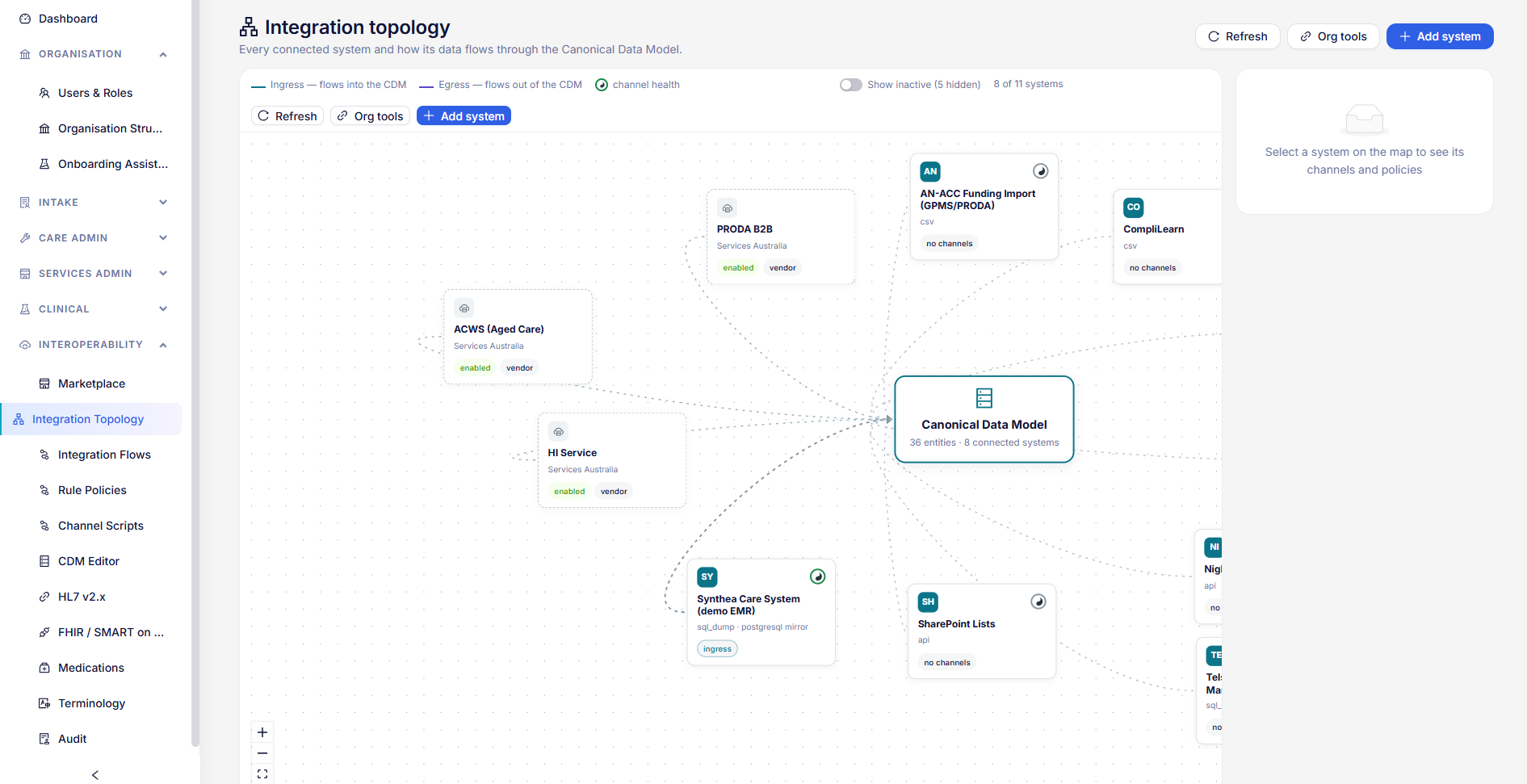
When someone accepts what the AI proposed, HealthOS applies it through the feature's own action. A confirmed code goes to the grouper and on to the claim. A fixed roster exception flows into care minutes reporting. The connections that follow, from Eclipse and ACWS to Xero and MYOB, carry it from there, so the AI's work never has to be typed into another system.
Claude through Anthropic, Azure AI Foundry or Amazon Bedrock
Each organisation connects its own model account, and the clinical work runs in it. An administrator binds each task to a tier, so handover gets the strongest model while routine summaries run on a cheaper one. You can change models without changing HealthOS.
- Your own account and keys
- A model tier for each task, set in the admin portal
- Every AI call logged, with no patient details in the log
Checked before anyone sees it
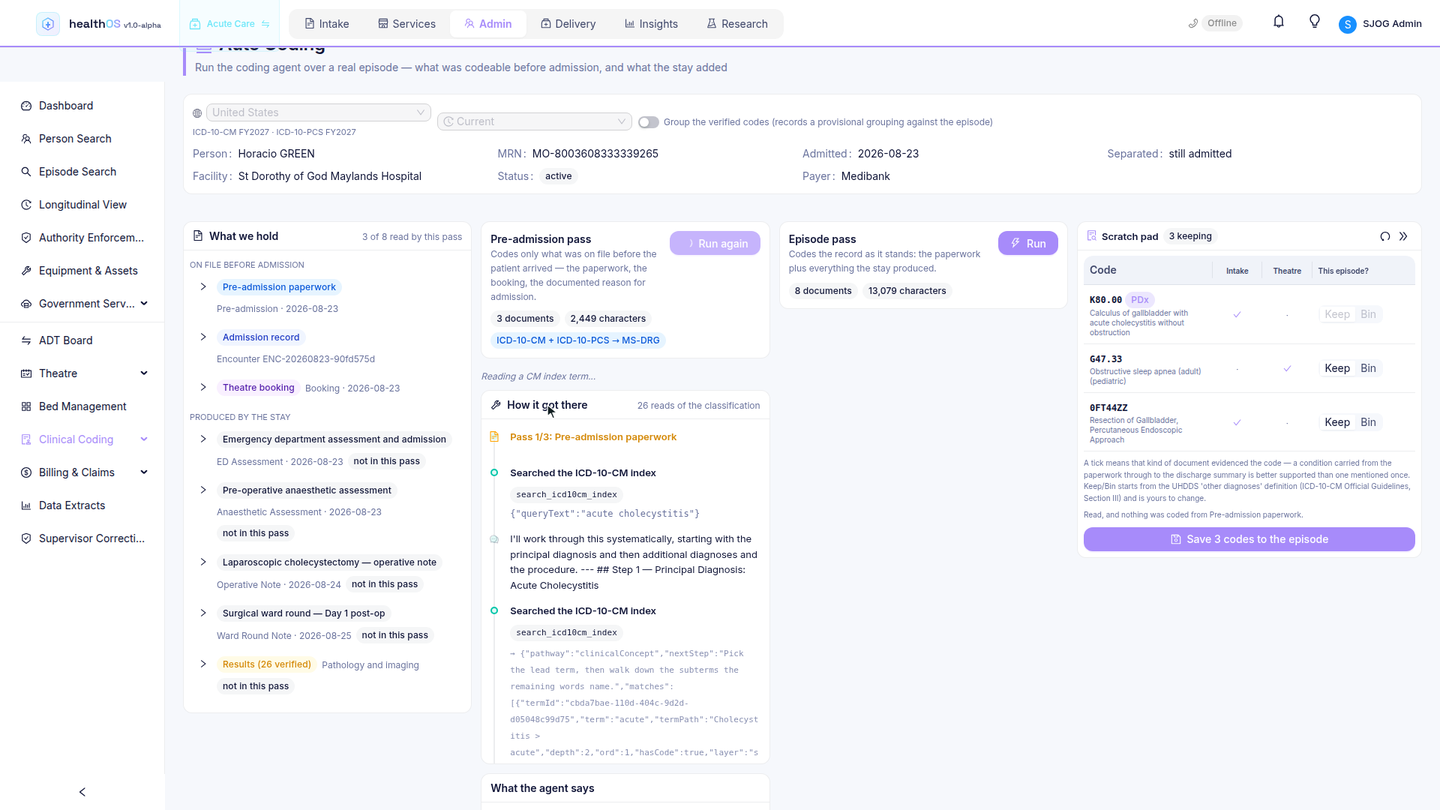
Identifiers come out before a record leaves HealthOS. The coding agent can only propose a code it actually reached in the classification, and the rostering assistant can only name a staff record, home or role it was shown. Whatever survives those checks waits for a clinician, coder or administrator to accept, edit or reject.
Where it works today
See the AI on your own data
We will walk you through it with your team. Bring questions.