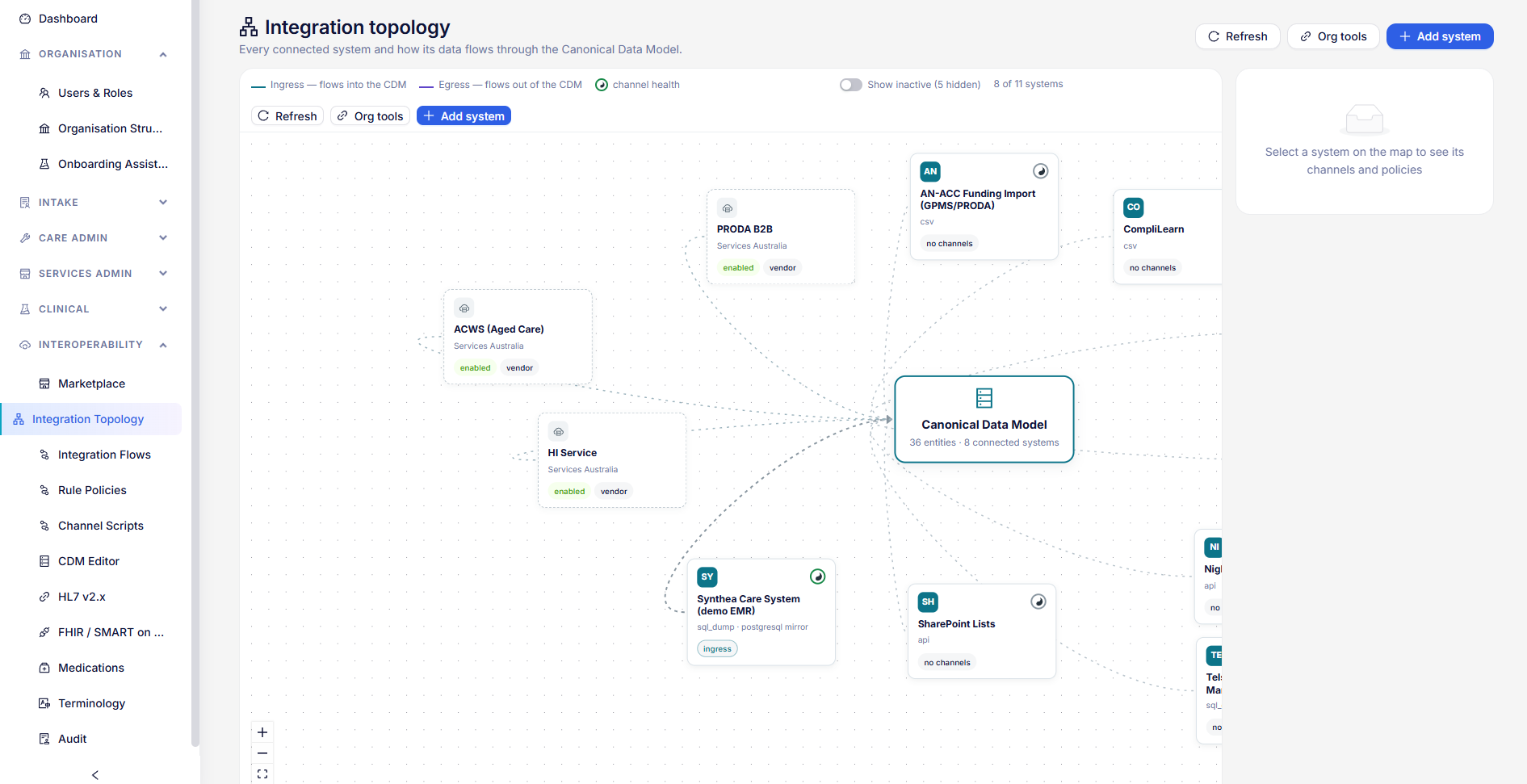
Fifteen clinical modules on one care record
Clinicians see the whole person in one place: their past, their present and their planned care. Things are written once. From assessments to progress notes, medication to wound care, it is a complete clinical platform coded to Australian standards.
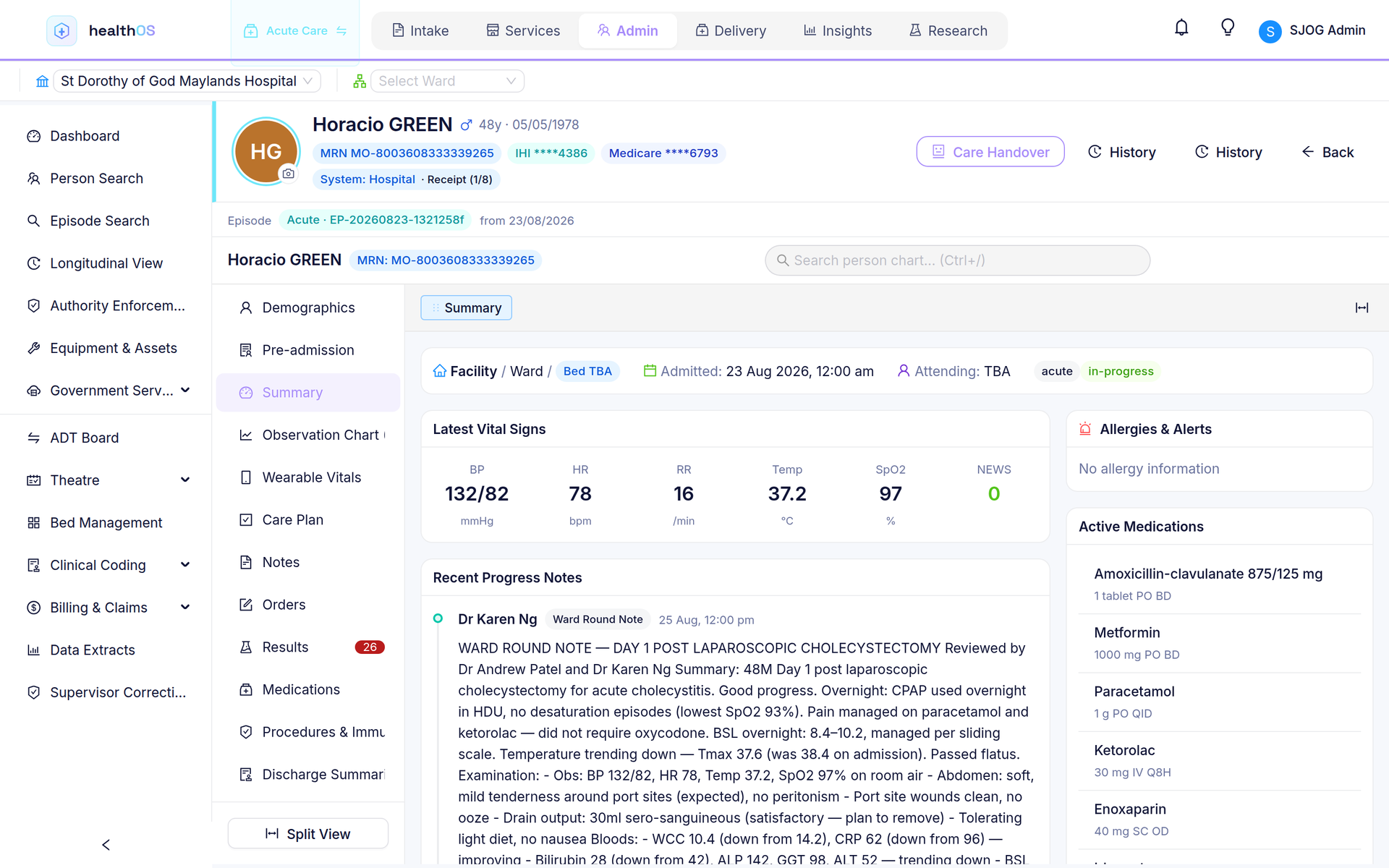
Clinical records for community services, with each worker's clients and tasks.
The full clinical suite for residential care.
Progress notes and care planning for NDIS.
Clinical care, connected
If it can be done on paper, it can be done better on a pathway
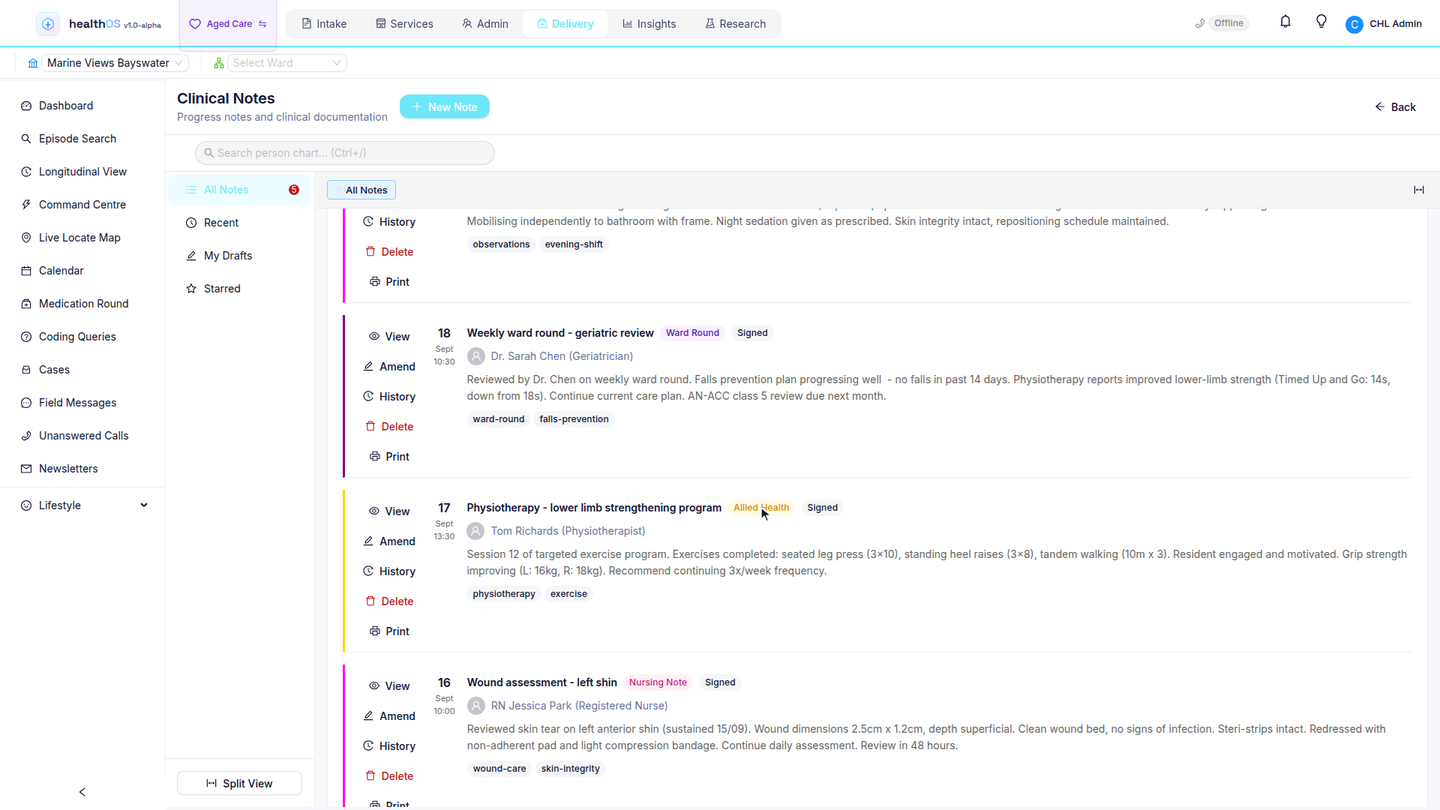
Assessments, care plans and progress notes are connected, and every entry links back to the care plan.
- Standardised and custom assessment forms, with scored instruments and automated risk flagging
- Goal-oriented care plans linked to assessments, interventions and progress notes
- Structured clinical notes with SNOMED CT-AU coding, searchable and auditable
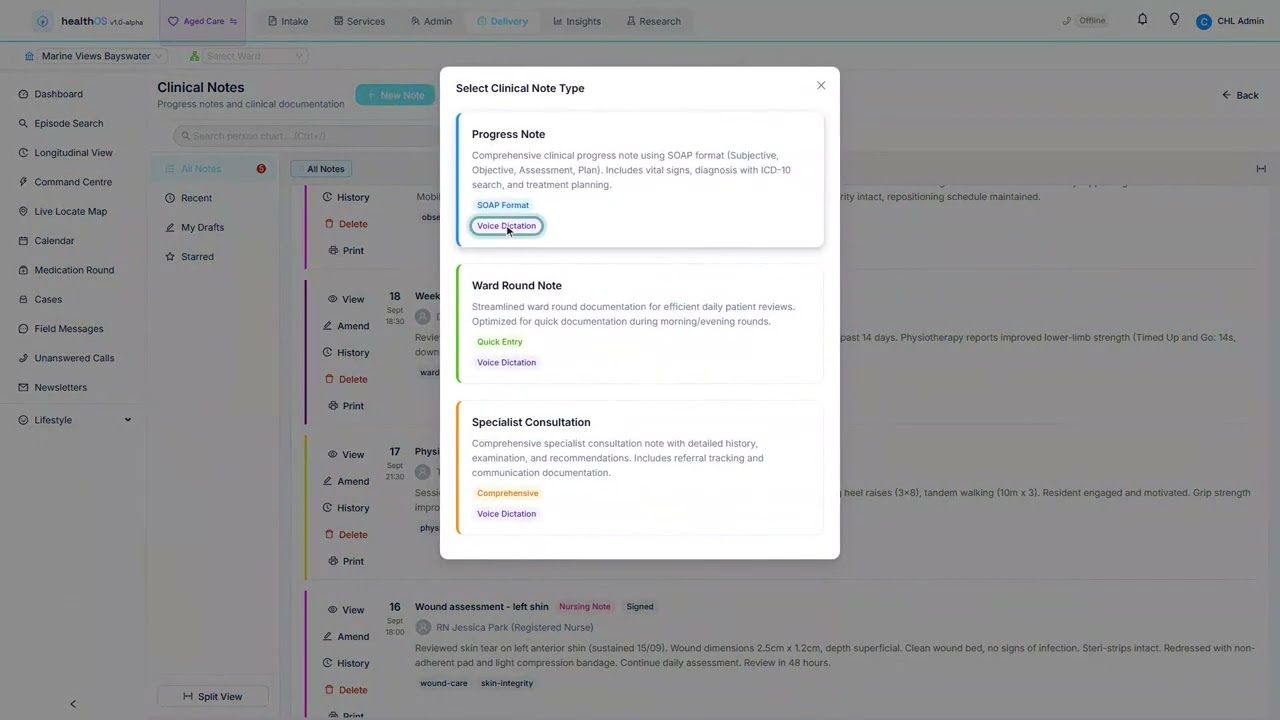
- Notes and vitals can be dictated by voice: spoken once, structured by AI, signed by the clinician
- Medications, pathology and radiology collected from your pharmacy, lab and imaging systems and shown on the record. Prescribing is covered on Medications
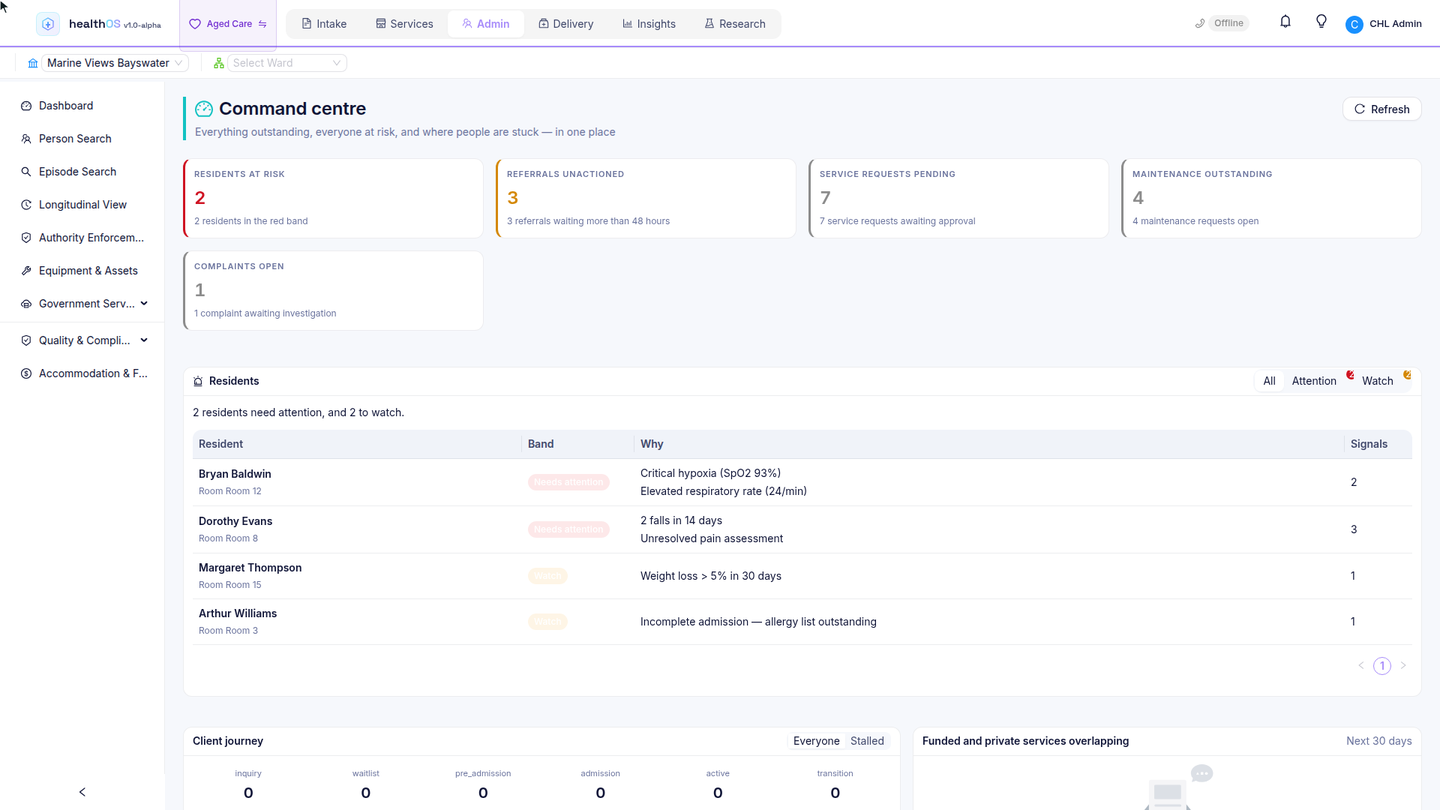
The same record in the community
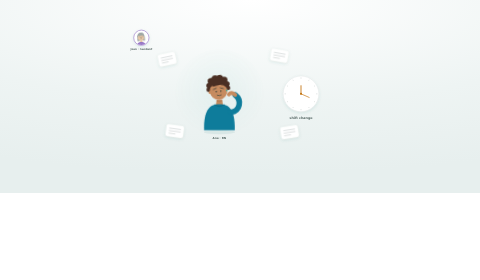
Home care teams work from the same clinical record, with their clients and pending clinical tasks in front of them.
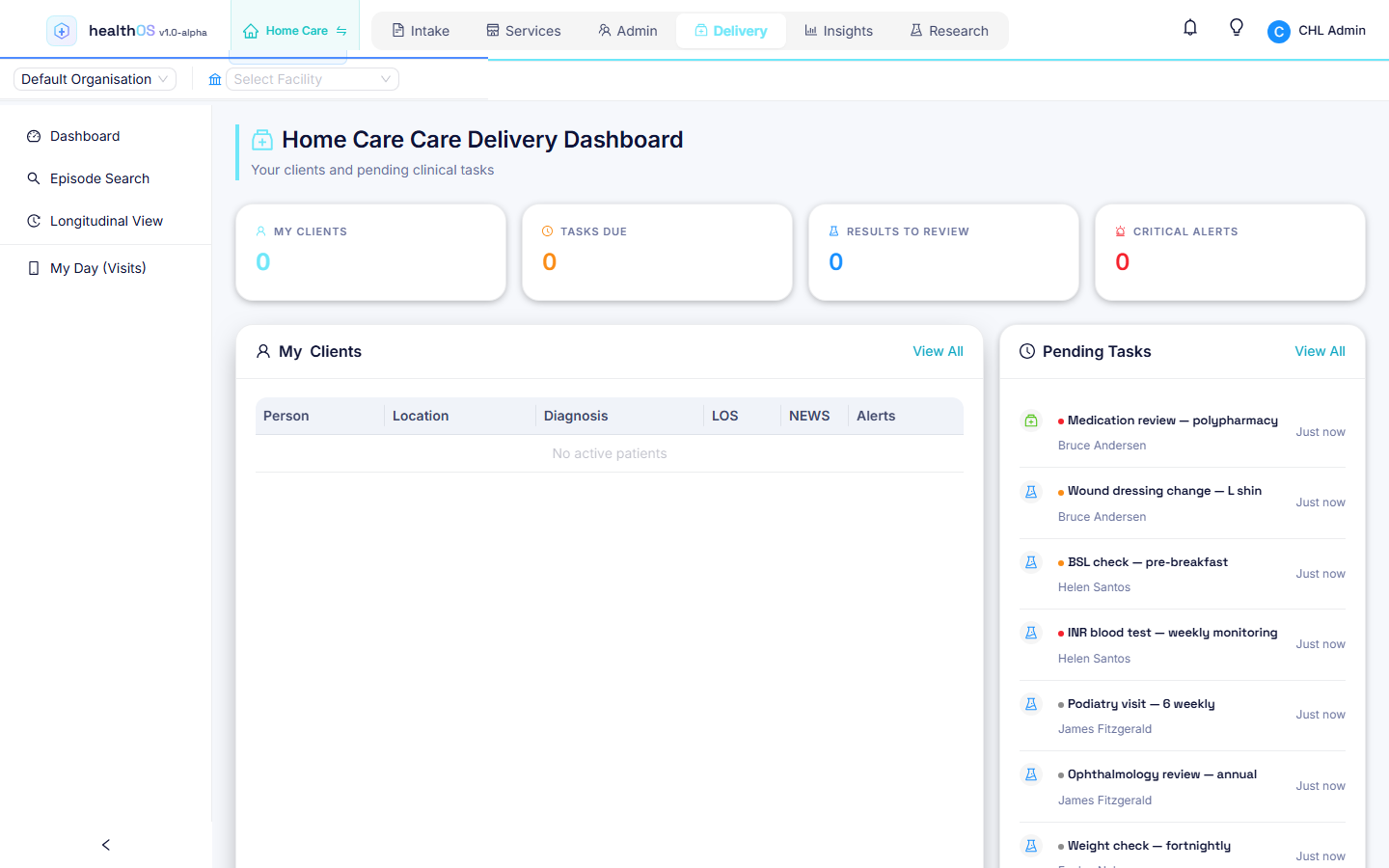
Fifteen modules, one record
Assessments, care plans, progress notes, medication, wounds, falls, pain, nutrition, continence, restraint, behaviour, infection control, palliative care, allied health and activities, all connected.
- A single clinical record
- Cross-module alerts and triggers
- Cognitive-aware assessment instruments for people living with dementia
- Structured and free-text entry
- 7-year audit trail
Coded to Australian standards
Every clinical entry is coded using SNOMED CT-AU for clinical terms. Diagnosis and procedure coding was designed in from the ground up, and ICD-10-AM and ACHI follow certification.
- SNOMED CT-AU via OntoServer
- Diagnosis and procedure coding, with ICD-10-AM and ACHI once certified
- Condition onset flags carried from the pre-admission record, so the coder sees what the episode added
- Aligned to the standard health-data format, FHIR R4 / AU Core
Discharge summaries read by AI, checked by a clinician
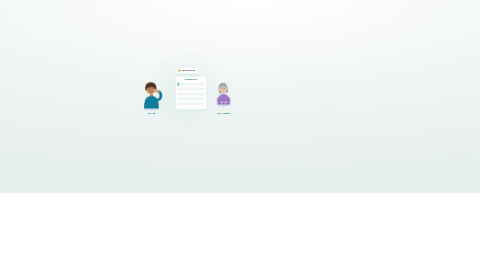
When a resident returns from hospital, the scanned discharge document is read by AI. Medications, diagnoses, follow-up actions and clinical findings are pulled into a draft for a clinician to review and accept before anything is written to the record or relied on, with no manual transcription. Summaries are then surfaced to families through HealthOS Connections.
Clinical notes are amended, never deleted
Clinical notes can be amended or retracted against an immutable audit journal. Every change records the original text, the amendment, the author, the timestamp and the reason, so corrections are transparent and meet clinical governance requirements without losing history.
- Amend or retract clinical notes with a full audit trail
- Original text preserved alongside amendments
- Nothing is ever truly deleted
See it in action
 1:25
1:25The short version
Related
See the clinical platform in action
We will walk you through it on real data. Bring questions.