Clinical deterioration detection with nine rules and one engine
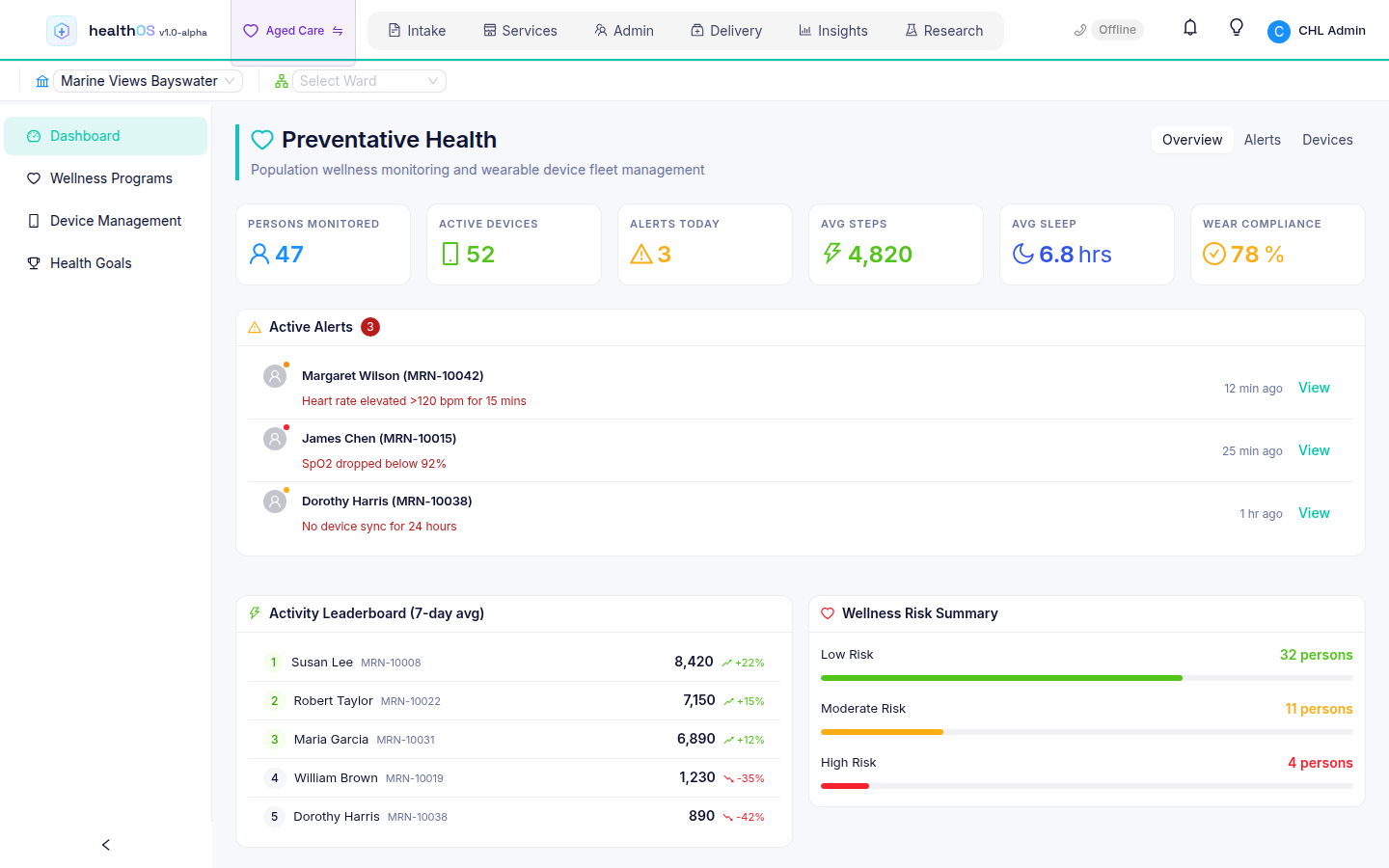
Deterioration gets caught while there is still time to act. A real-time rules engine evaluates every incoming reading against window-based detection patterns, whether it came from a cellular device, manual entry or an ingested clinical system, and routes alerts by role, scope and urgency.
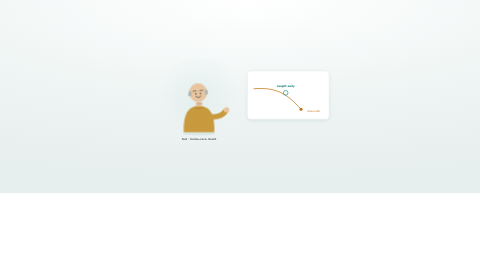
Routes to the nurse unit manager.
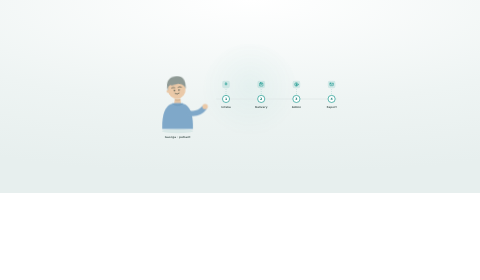
Routes to the RN and the NUM.
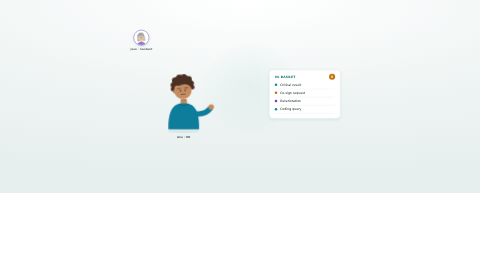
Routes to the RN, the NUM and allied health.
Pattern detection on top of threshold alerts
Window-based detection instead of single-reading alerts
Legacy threshold alerting fires on every reading that crosses a line. The result is alert fatigue, ignored notifications and missed patterns. The HealthOS engine evaluates over configurable 7-day and 30-day sliding windows, so sustained trends, rate-of-change patterns and multi-metric clusters drive detection. Every incoming reading triggers evaluation across all active surveillance widgets on the person's chronic-condition pathways.
- BP uncontrolled: the majority of systolic readings above 140 mmHg over 7 days, rather than a single spike
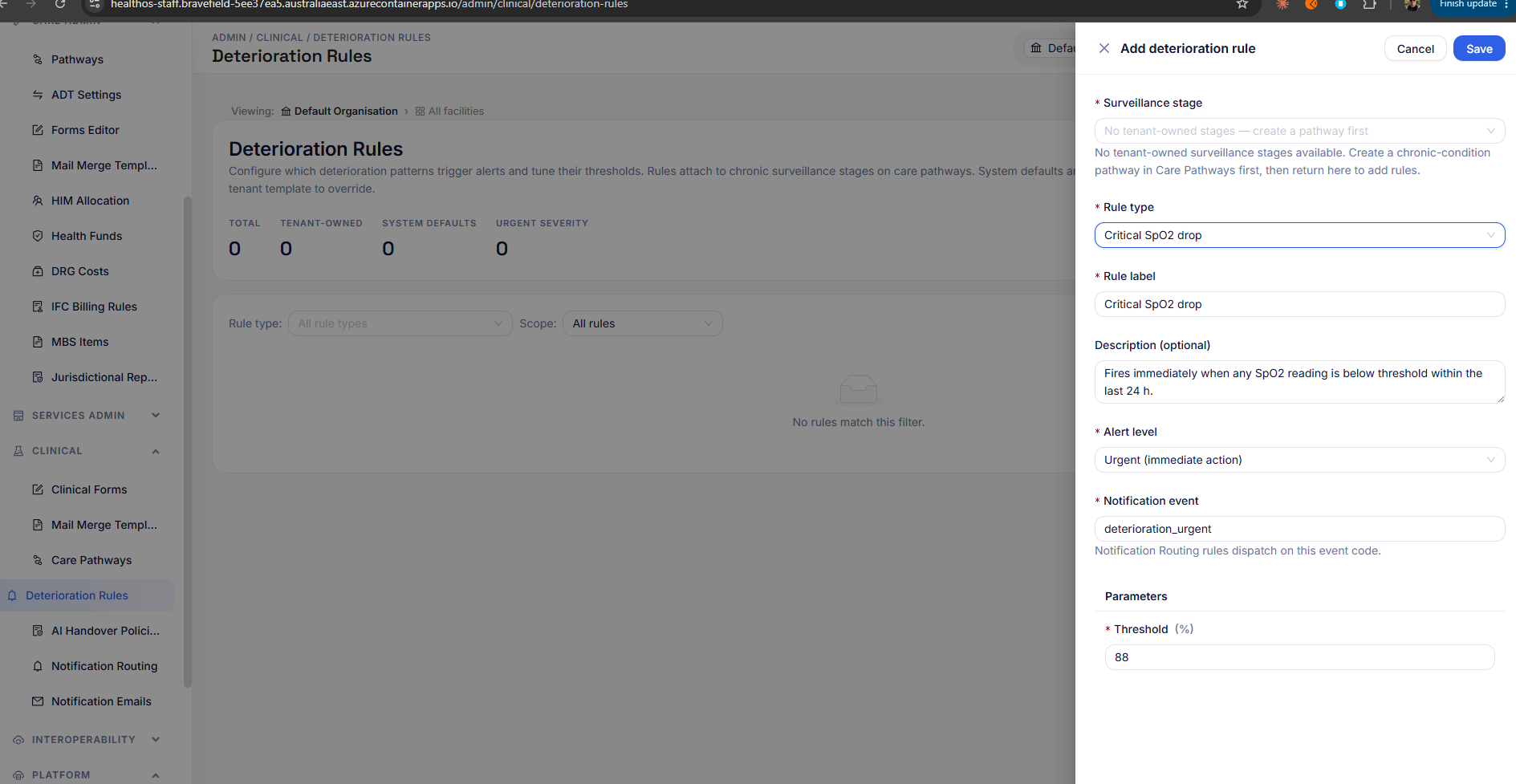
- SpO2 critical: any reading below 88%
- SpO2 sustained: the majority of readings below 92% across the window, rather than one dip
- Respiratory rate elevated: sustained RR above 24/min
- Glucose hyperglycaemia burst: 3 or more readings above 11.1 within 24 hours
- Glucose hypoglycaemia event: any reading below 3.0
- Weight gain: more than 2 kg over 7 days, signalling fluid retention in CKD and HF
- Multi-at-risk cluster: 3 or more metrics in the concern band at once flags systemic deterioration
- Missed readings: the absence of expected data triggers follow-up before deterioration goes undetected
One engine reads every data path
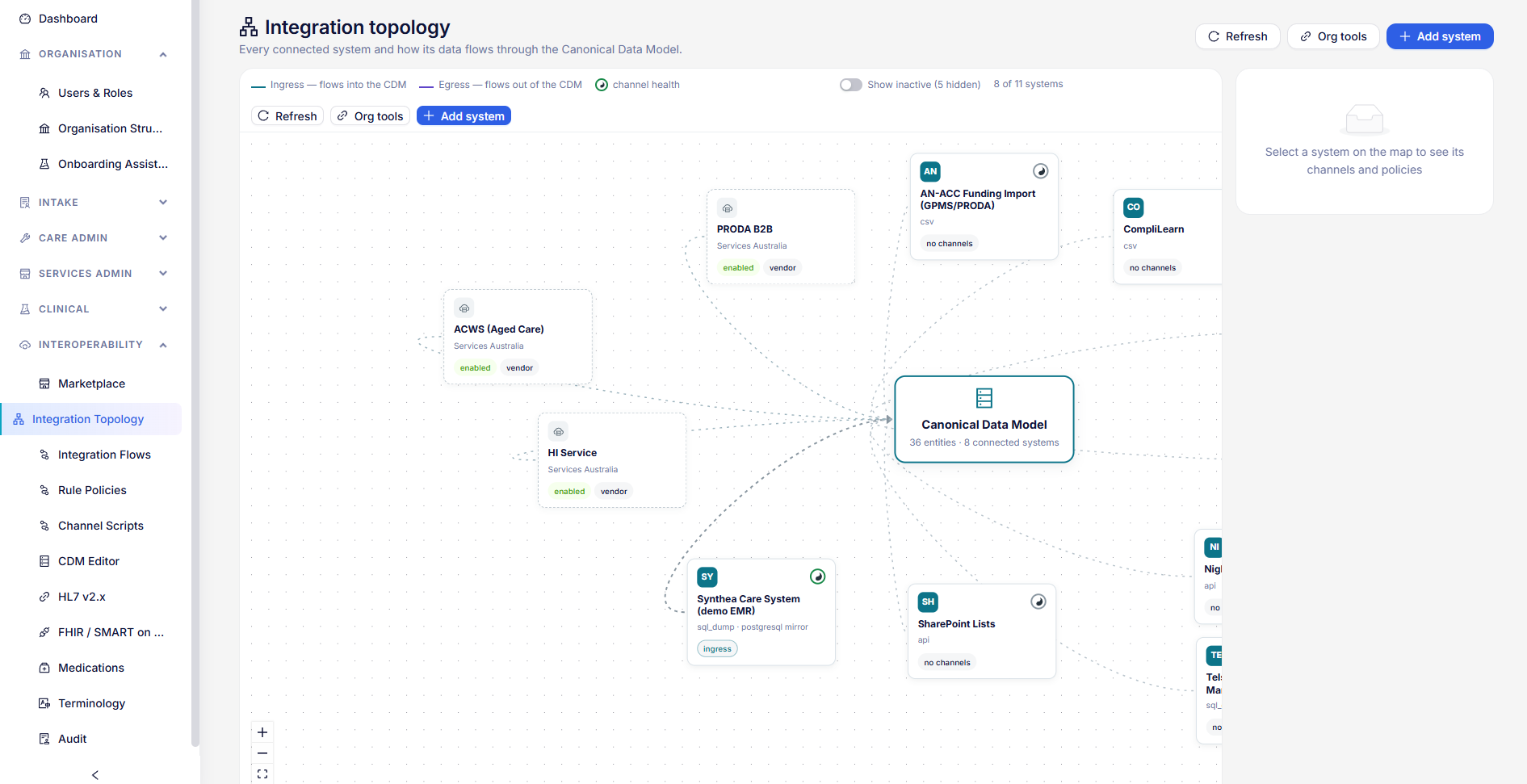
The engine reads from a canonical data layer that unifies wearable readings, manually recorded vital signs and data ingested from your existing clinical systems. Each reading type is normalised to one metric code regardless of origin, so the evidence pool is the same whether a reading came from a device, a nurse or an ingested system.
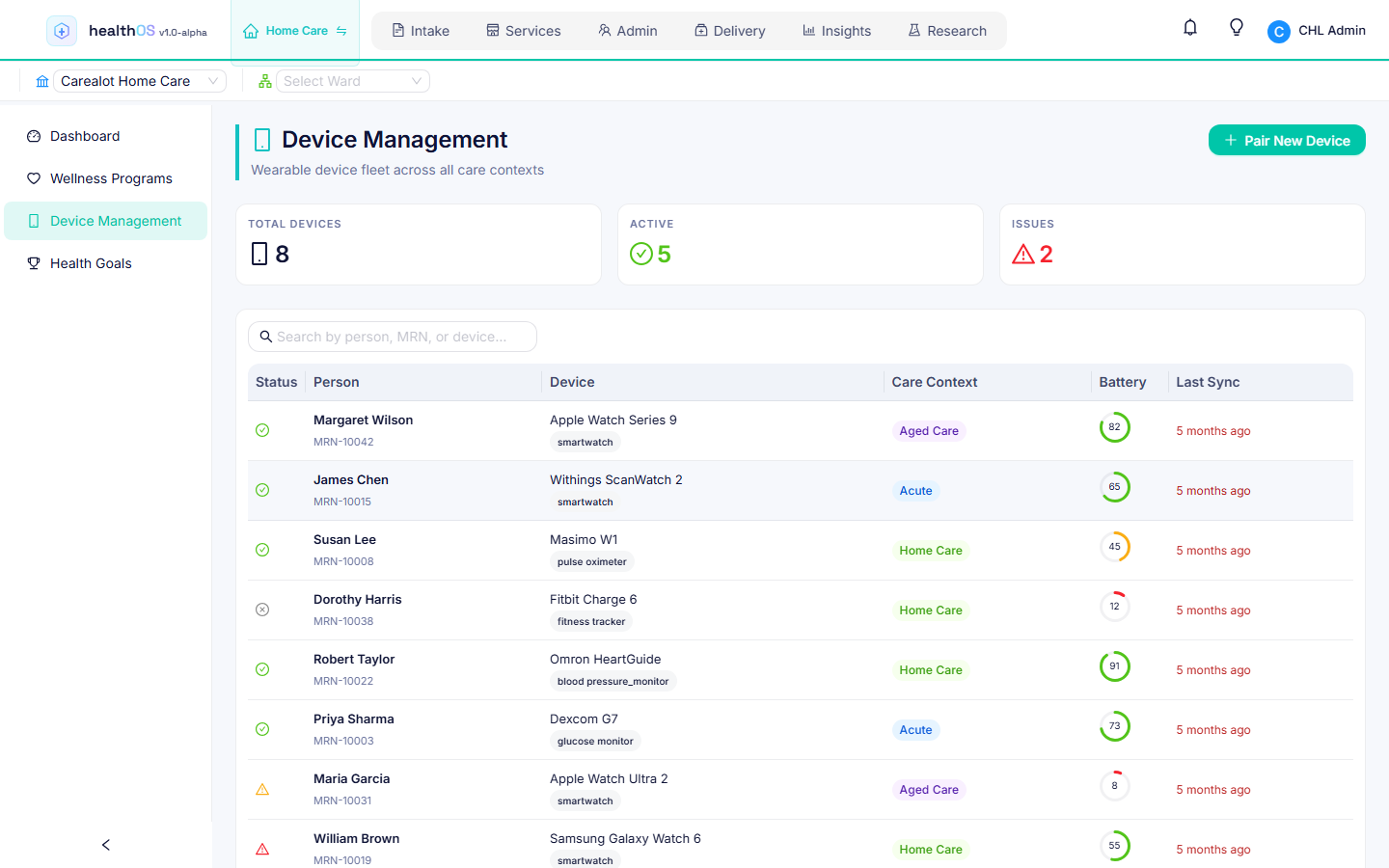
- Cellular blood pressure monitors, smartwatches and smart scales write to wearable_readings
- Manual vital signs entered by nursing staff write to vital_signs
- Clinical system integrations land in the same canonical tables
- A canonical UNION query normalises reading_type to metric codes for rule evaluation
- Adding a new data source needs no change to the detection rules: the new feed lands in the same canonical read and is evaluated immediately
Accumulate evidence instead of flooding
Traditional systems create a new alert for every threshold breach, and clinicians learn to ignore the hundreds of duplicates. HealthOS keeps one open alert per rule per person and extends its evidence on each evaluation until the alert is acknowledged or resolved.
- New evidence extends the existing alert rather than spawning a duplicate
- Evidence deduplicated by source table and source ID, capped at 50 entries
- Full lifecycle: open, acknowledged, resolved, with clinician attribution
- Notification fan-out fires once per alert creation, never per evidence extension
- Every notification logged with channel, recipient, timestamp and delivery status
- Tuned per pathway through the surveillance widget config, with no code changes
Alerts reach the right clinician
Alerts route by role and scope, in-app and by email. Routing resolves from the most specific scope outward: a facility's own rule wins over a tenant-wide one, which wins over the system default. A multi-site provider sets sensible defaults once, and any facility can override how its own alerts are routed, centrally and without code.
Detection rules by condition pathway
Each chronic-condition pathway seeds surveillance widgets with condition-appropriate detection rules. Severity and routing are configurable per organisation.
| Pathway | Rule | Severity | Fires when |
|---|---|---|---|
| CVD | bp_uncontrolled | Watch | Majority of 7-day systolic readings above 140 |
| CVD | multi_at_risk_cluster | Concern | 3 or more metrics in the concern band |
| Diabetes | glucose_hyper_burst | Concern | 3 or more readings above 11.1 in 24 hours |
| Diabetes | glucose_hypo_event | Urgent | Any reading below 3.0 |
| Diabetes | multi_at_risk_cluster | Concern | 3 or more metrics in the concern band |
| CKD | bp_uncontrolled | Concern | Renal risk from sustained hypertension |
| CKD | weight_gain | Concern | More than 2 kg in 7 days (fluid balance) |
| CKD | missed_readings | Watch | Expected readings missing |
| COPD | spo2_critical | Urgent | Any reading below 88% |
| COPD | spo2_sustained | Concern | Majority of readings below 92% |
| COPD | resp_rate_elevated | Concern | Sustained RR above 24/min |
Connected across the platform
Cellular-connected devices give wellness and monitoring programs early detection between visits. Chronic-condition care pathways supply the prevention screening and escalation triggers, and care delivery holds the one care record the readings join.
Related
See the deterioration engine in action
A 45-minute walkthrough with live detection rules firing against real device data from a reference deployment.