Between-visit early detection, no smartphone required
When care moves into the home, the monitoring has to follow. Cellular-connected devices sync vital signs to the clinical record, clinicians set thresholds, and the platform alerts on deterioration before the next scheduled visit.
Clients living alone are watched over between visits.
Staff fit the device during routine care; readings flow by themselves.
Every reading is research-ready at the point of collection.
Continuous monitoring that works without patient effort
Devices and data
| Capability | What it does |
|---|---|
| Cellular devices | Blood pressure monitors, watches and smart scales that auto-sync over cellular. No smartphone, no Wi-Fi pairing and no app installation. |
| Continuous glucose | Continuous glucose monitor readings come in through the manufacturer's cloud API and map to FHIR R4 Observation resources. Glucose trends are visible in the clinical record. |
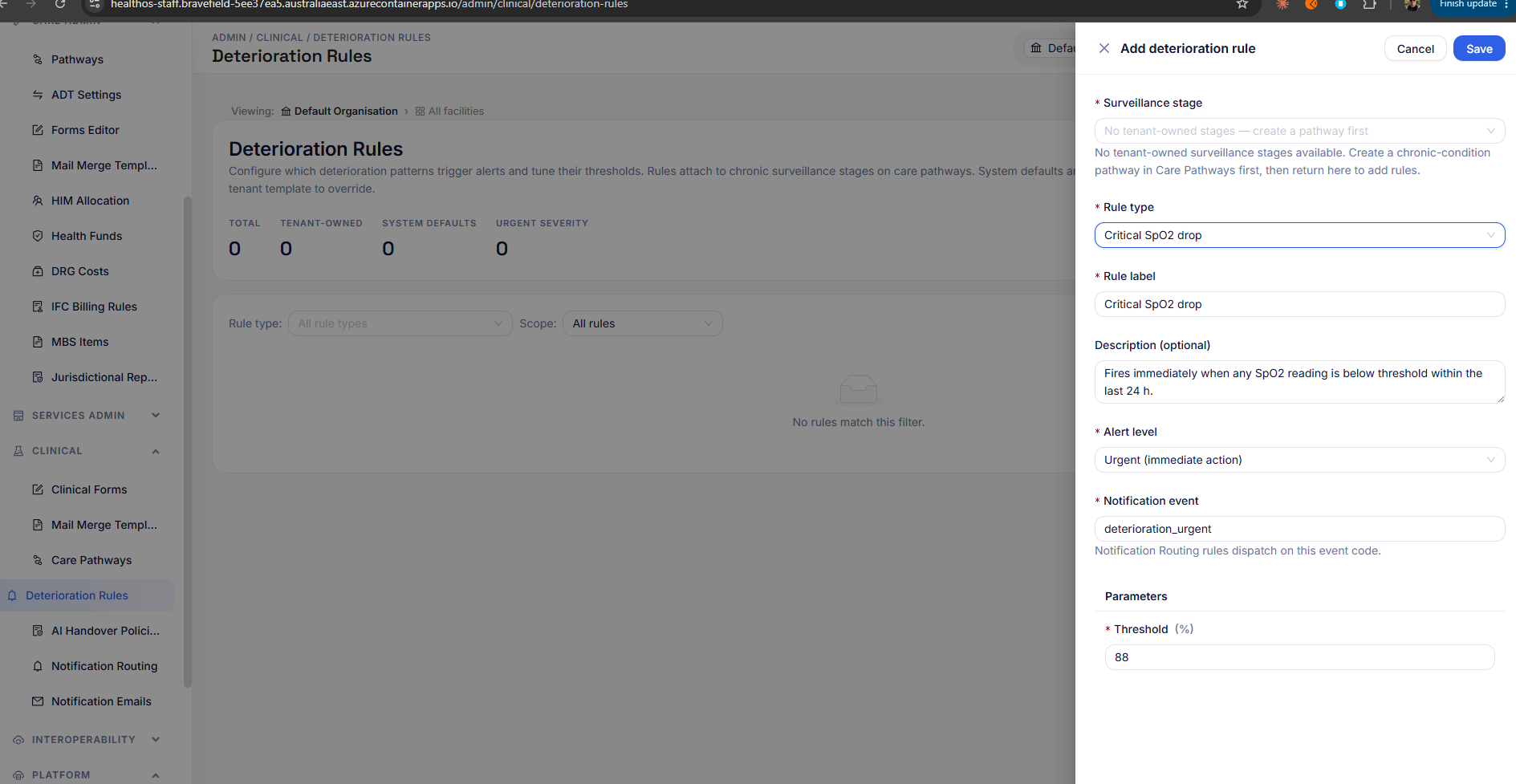
| Clinical thresholds | Configurable alerting per condition, for example systolic BP >140 mmHg, SpO2 <92%, glucose >11.1 mmol/L and eGFR <60, sourced from Australian clinical guidelines. Feeds the deterioration engine for window-based detection. |
| FHIR Observation mapping | Every reading is written as a FHIR R4 / AU Core Observation resource with LOINC codes and UCUM units. Device provenance is tracked. |
| BYOD aggregation | Consumer-owned devices connect through a health data aggregator, including phone health platforms and popular wearables, so a client's own smartwatch or scale can feed the record. Aggregated readings land as the same FHIR Observations as clinical devices, tagged by source so clinicians can weigh them accordingly. |
| Escalation triggers | Nine detection rules in the deterioration engine evaluate every reading against window-based patterns. Alerts route by role and urgency, in-app and by email, to the responsible clinician. |
No smartphone required
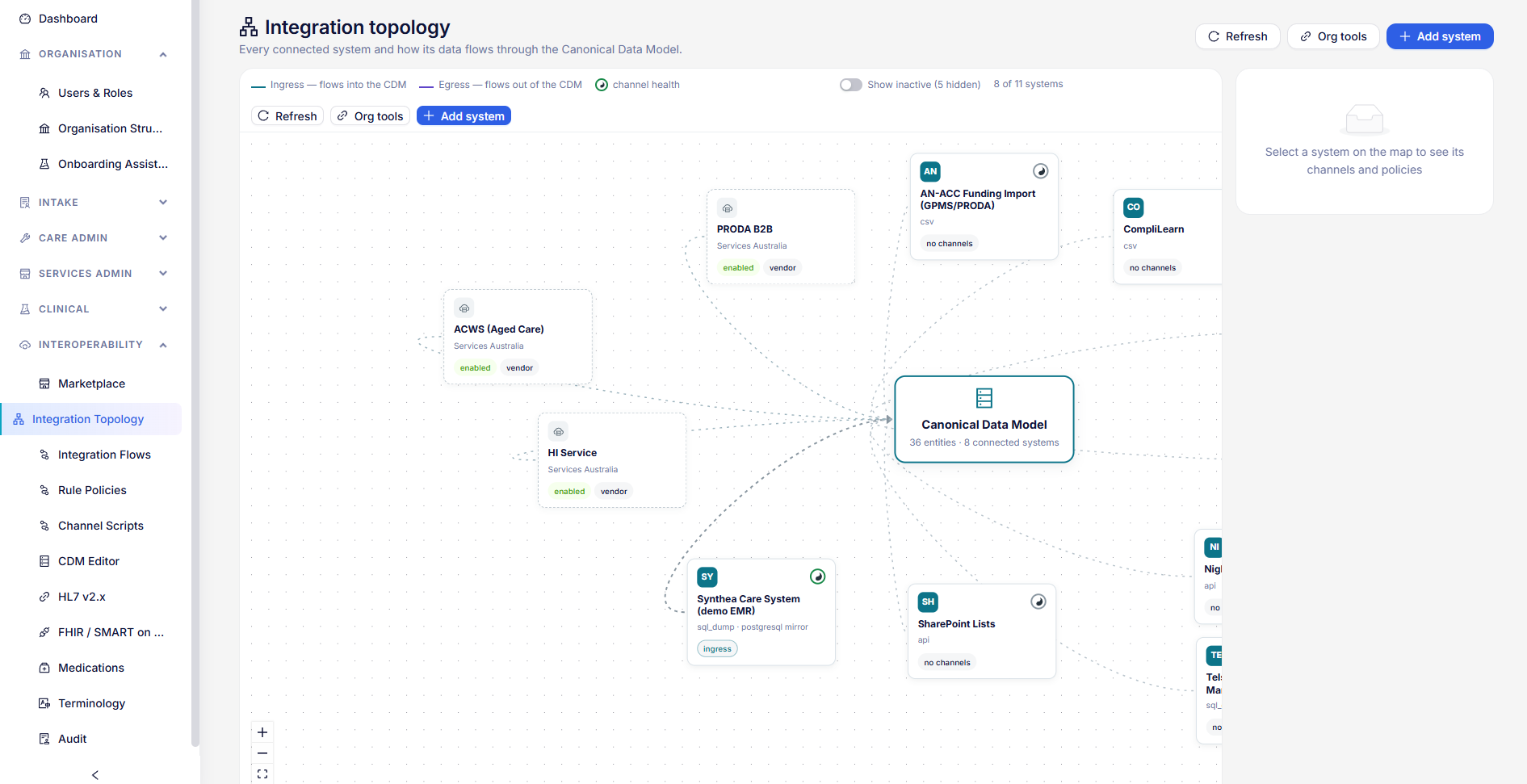
The biggest barrier to remote monitoring in aged and home care is the smartphone. Most older Australians, especially those with cognitive impairment, do not own or operate one. Cellular-connected devices get around this entirely.
- Cellular models sync directly to the cloud via an embedded SIM
- No app installation, no Bluetooth pairing and no Wi-Fi password
- Nursing staff fit the device during routine care, then readings flow automatically
- Equally important for home care clients living alone between visits
Early detection of deterioration
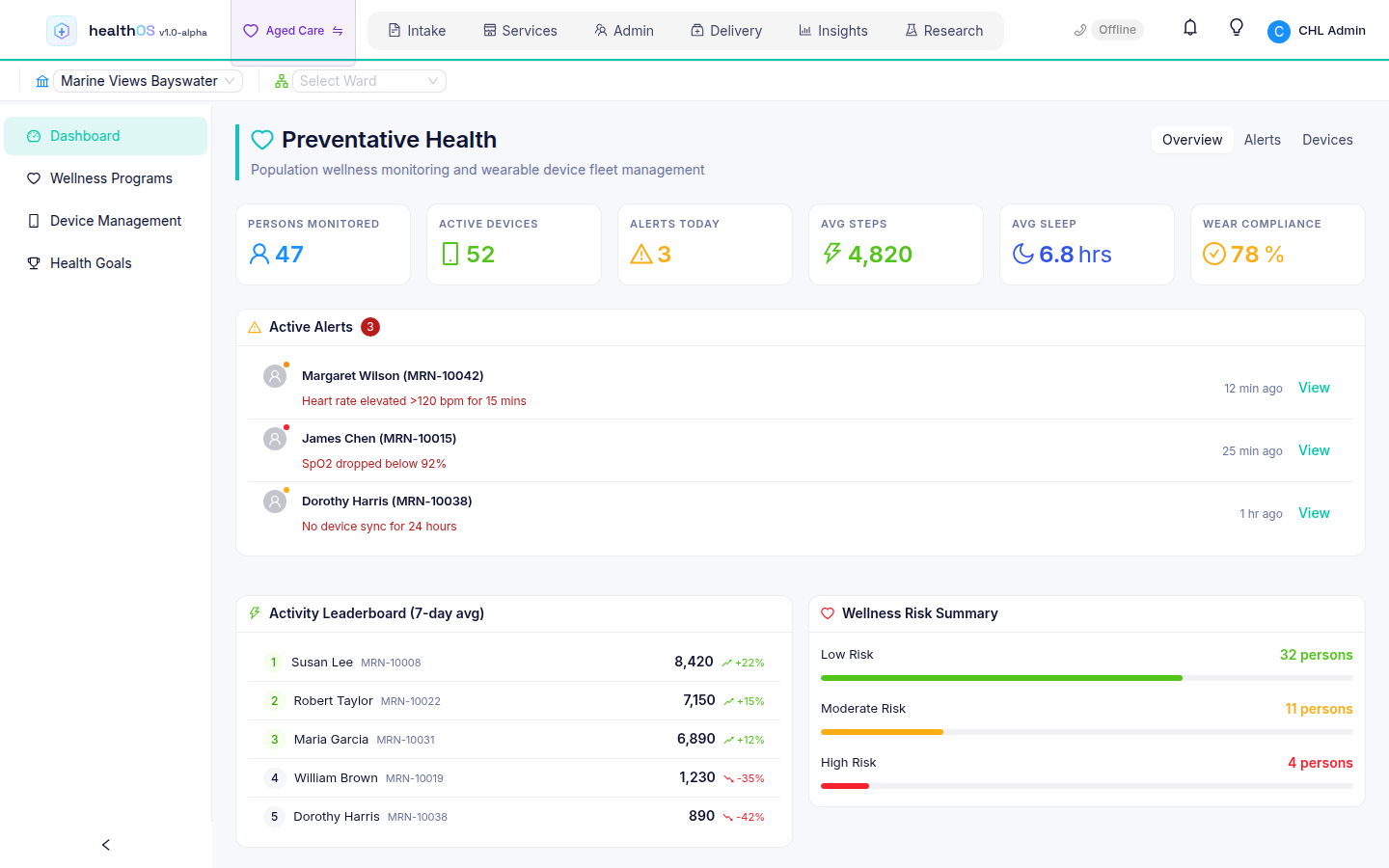
Between-visit monitoring picks up adverse trends before they become emergencies. The deterioration engine evaluates every reading against nine detection rules with window-based trend analysis, going beyond single-reading threshold alerts.
- Condition-specific monitoring cadences: BP daily, glucose daily (CGM preferred), eGFR 3-monthly, SpO2 daily, weight daily or weekly
- Window-based trend analysis over 7-day and 30-day sliding windows
- Nine detection rules, including bp_uncontrolled, spo2_critical, glucose_hyper_burst, weight_gain, multi_at_risk_cluster and missed_readings
- Role-based notification routing: watch to the NUM, concern to the RN and NUM, urgent to the RN, NUM and allied health
- Threshold bands sourced from the RACGP Red Book, KDIGO 2024, GOLD 2024 and ADS guidelines
- The patient and family portal shows today's measurements as due, completed or overdue in each pathway widget
Research-ready from collection
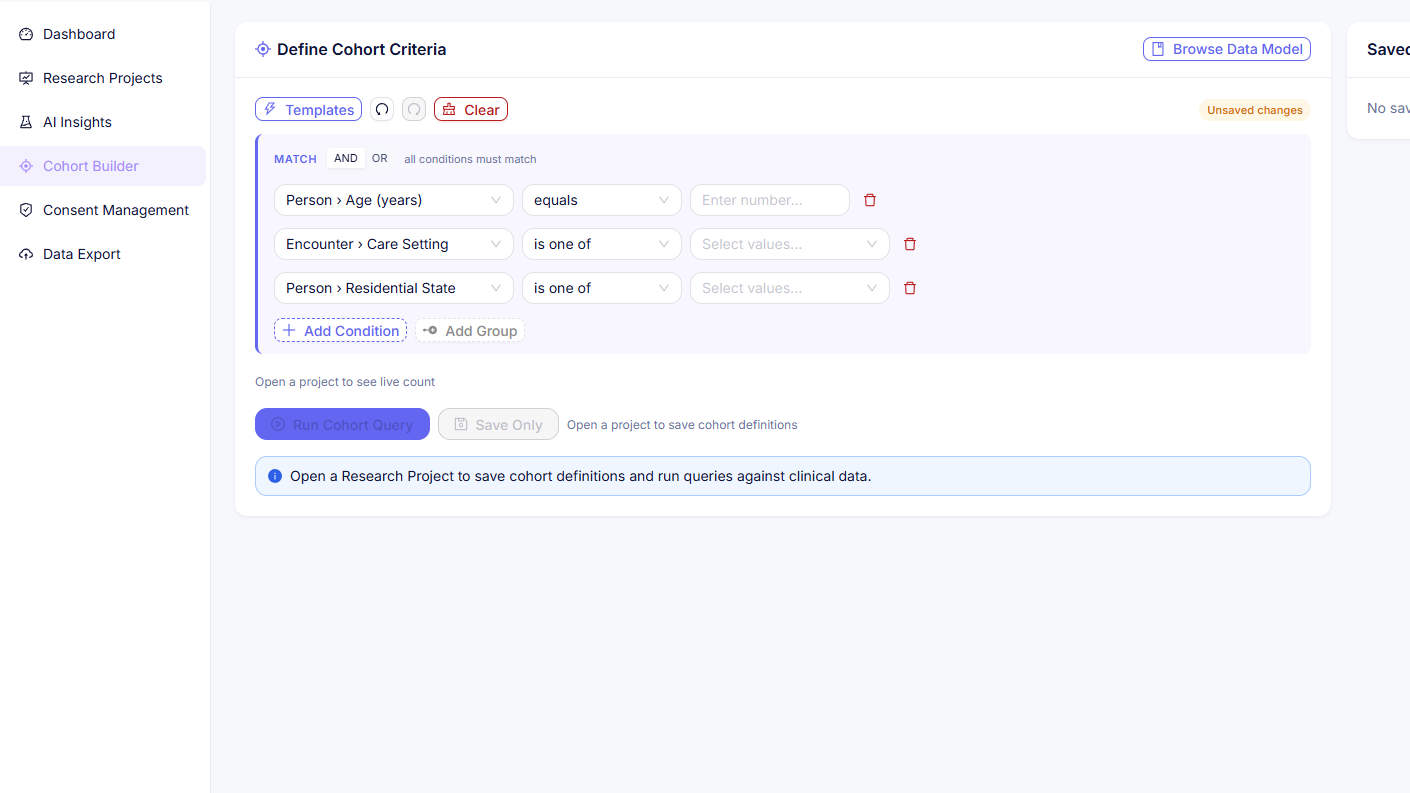
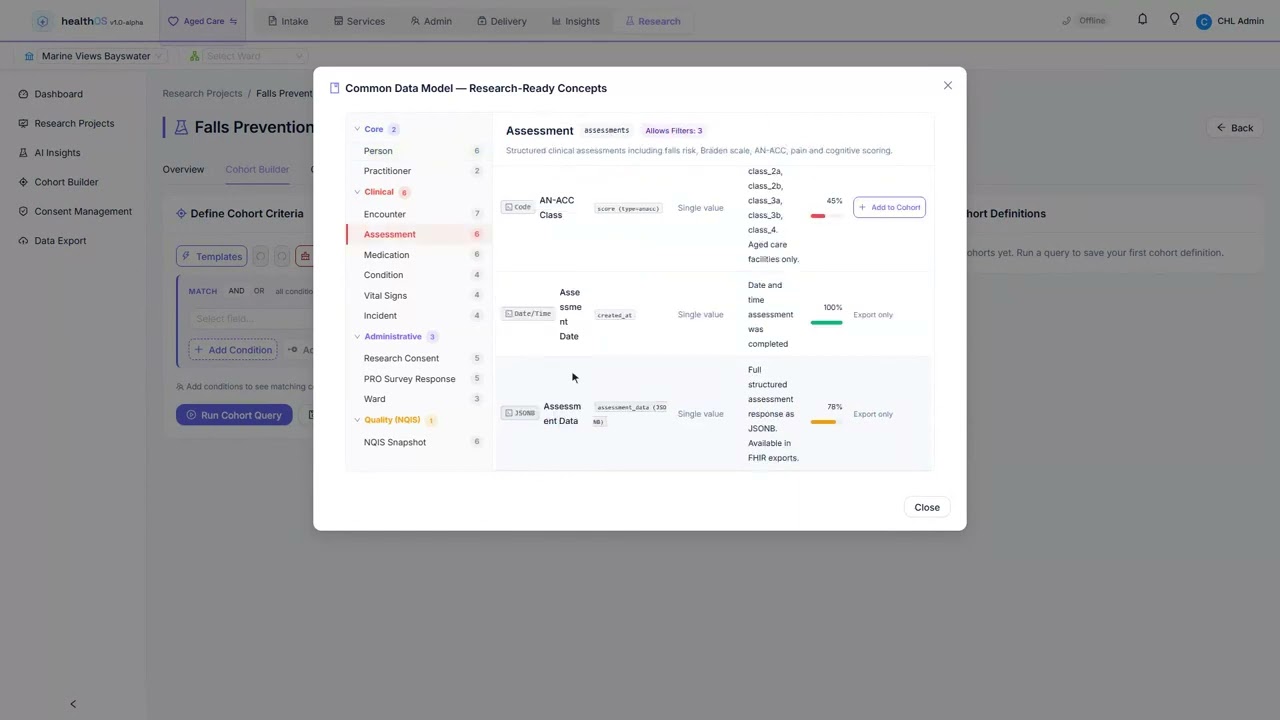
Every monitoring measurement is exposed as a standards-conformant FHIR R4 Observation at the point of ingest, so nothing has to be extracted later for evaluation. The research dataset builds as care happens. See research.
- LOINC-coded observations with UCUM units (mmHg, mmol/L, kg, %)
- Observation.device references trace to the source device
- Companion Provenance resources for a full audit chain
- The same FHIR endpoint serves both clinical care and research evaluation
- No retrospective extraction or format conversion required
See it in action
 1:56
1:56
Related
See monitoring and alerting in action
A 45-minute walkthrough with real device data from a reference deployment.