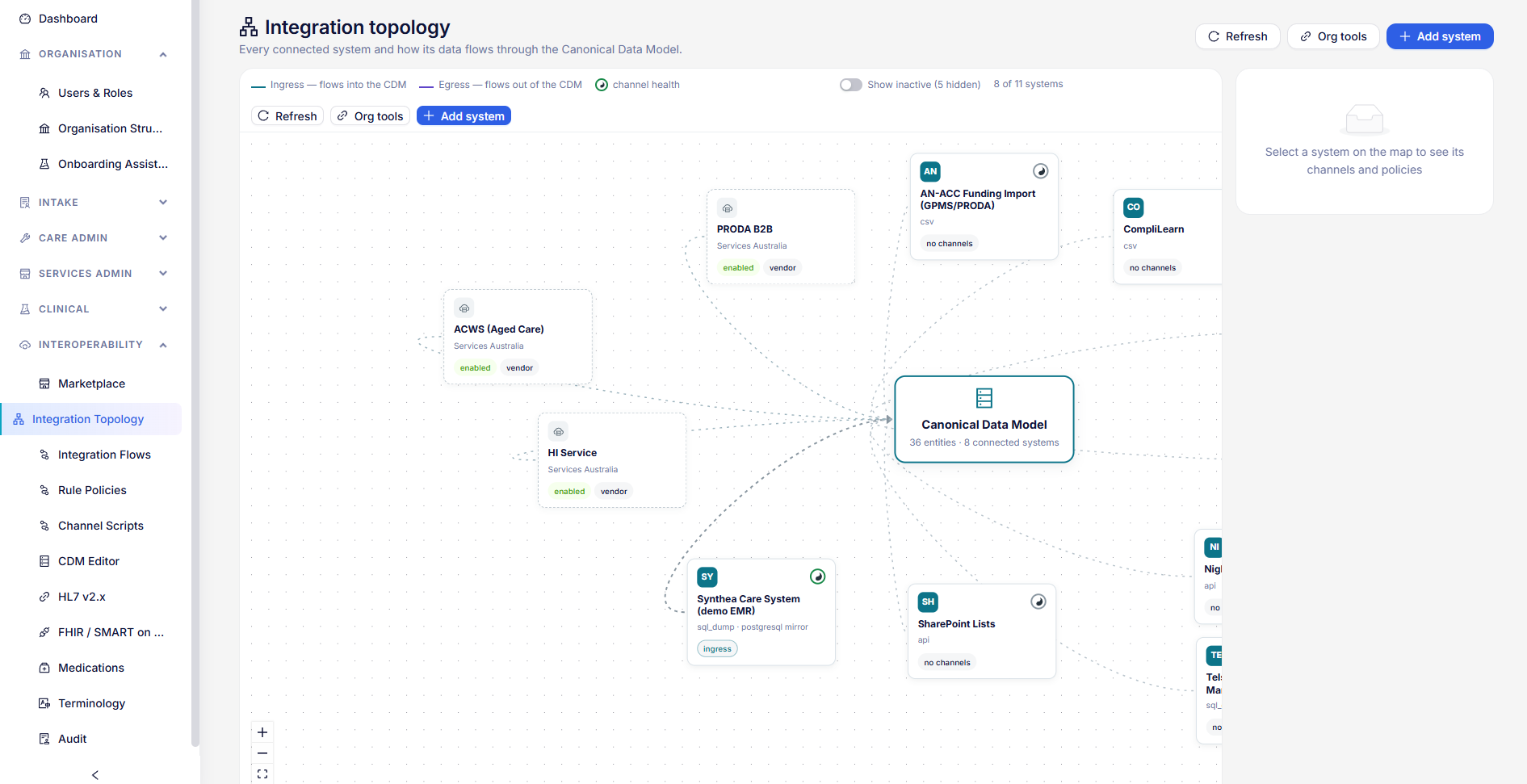
Clinical coding that stays inside the classification
Manual code navigation, live DRG grouping and an AI autocoder that works the way a coder does: search the index, follow the cross-references, verify in the tables. Every code it keeps traces back to the document and the sentence it came from. Today it codes in ICD-10-CM and ICD-10-PCS and groups to MS-DRG, which is what these screens show. ICD-10-AM, ACHI and AR-DRG follow certification.
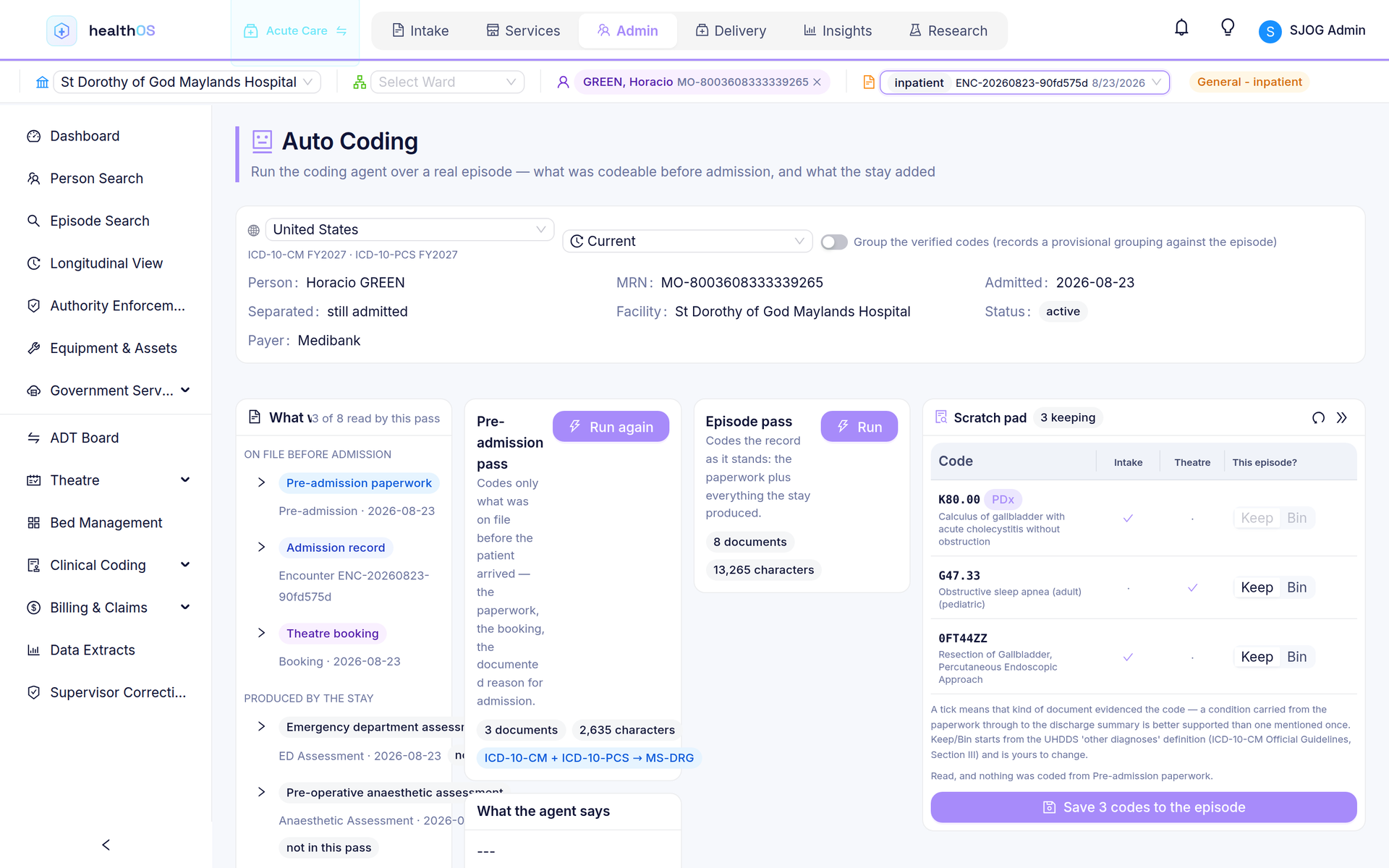
Index search first, then code table verification, as the coding standards require.
An agent that navigates the classification and refuses any code it can’t prove.
The grouping updates with every code, so funding impact is visible as you work.
A finalised code set and DRG move to the claiming queue with no re-keying.
Code faster, and prove every code
Search the index, verify in the tables
Type a term such as “cellulitis” and the Code Finder searches the classification index, showing lead terms, modifiers and cross-references as they appear in print. Follow a reference into the tables, drill to the character level the code needs, and read inclusions, exclusions and coding notes inline.
- Diagnosis and procedure codes in the same interface
- Procedure codes built axis by axis: body part, approach, device and qualifier
- Every assignment timestamped and attributed in the coding timeline
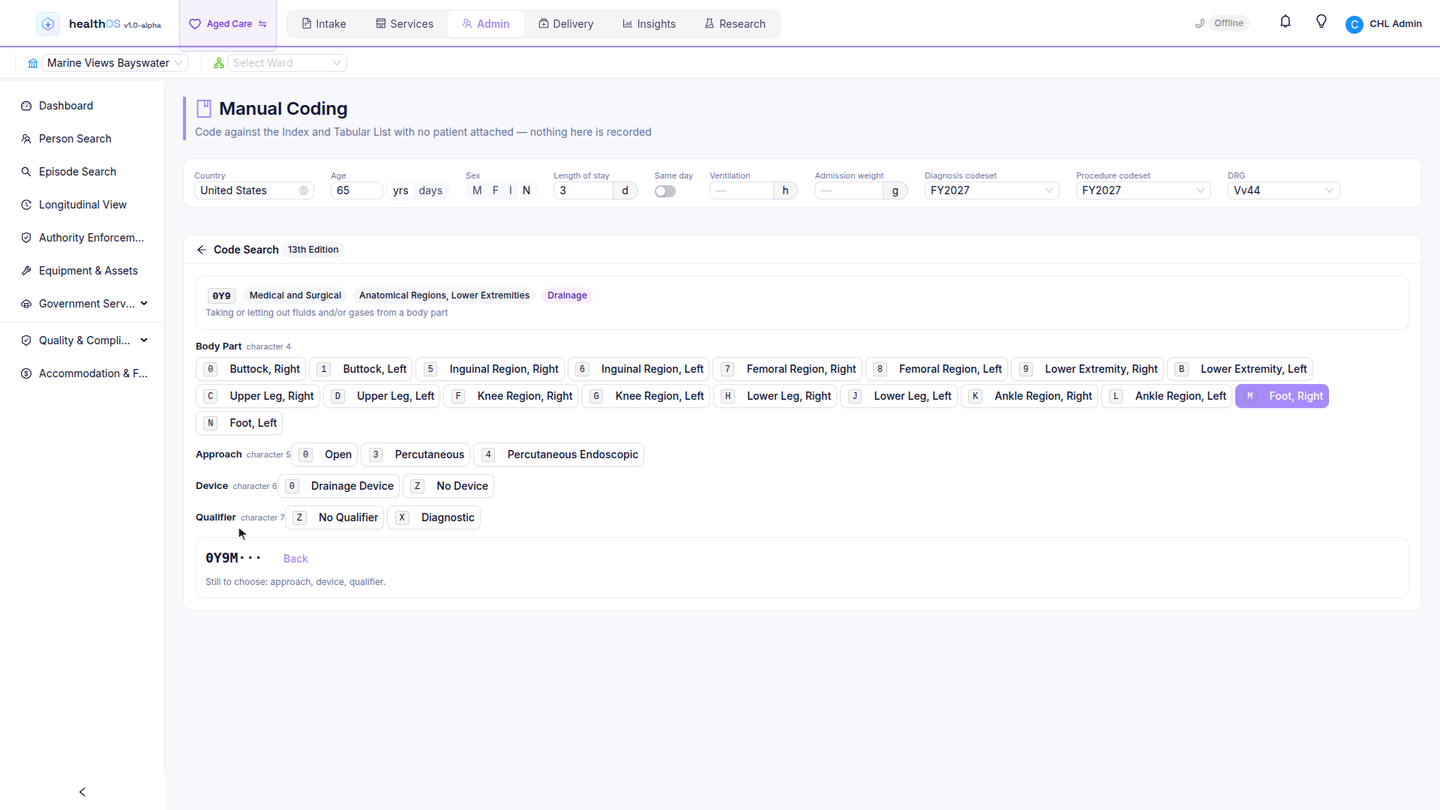
Live DRG as you code
As codes are added the grouper runs and returns the Diagnosis Related Group that drives funding. The result updates with every change, so a coding decision and its funding impact are visible together.
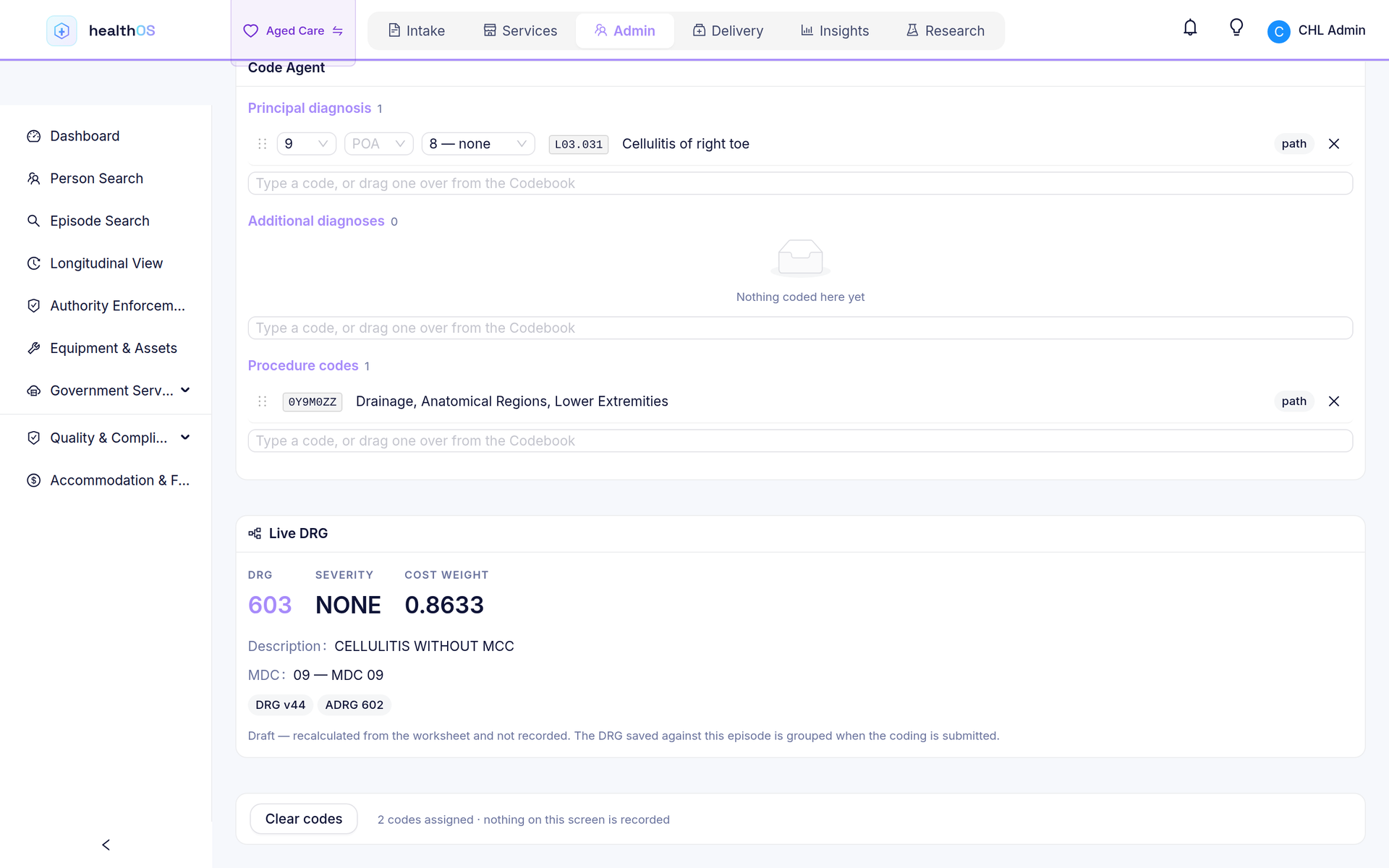
An agent that codes the way a coder does
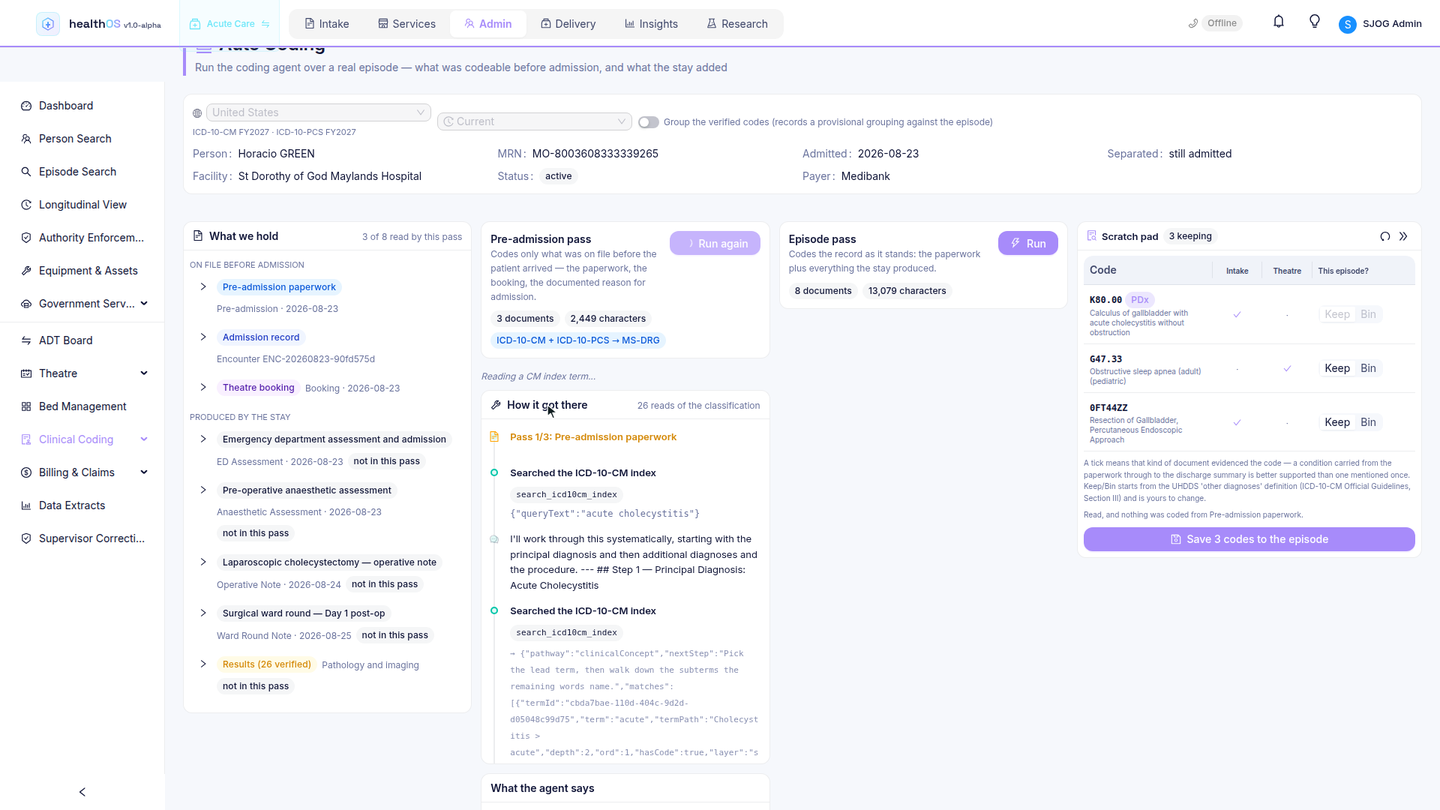
The autocoder reads the clinical record for an episode: discharge summaries, progress notes, procedure reports and pathology. For each condition or procedure it searches the code index, follows every cross-reference, then verifies the candidate in the code tables. A code it can’t prove it navigated to is refused. Nothing is recalled from training data.
- A pre-admission pass codes only from what was on file before the patient arrived
- A post-discharge pass codes from the full episode record
- Each pass is independent and produces its own traceable result
Every code traces back to its source
Each code shows the document, the sentence and the classification path behind it: the search term, the index result, the cross-reference and the tabular check. Patient identifiers are removed before any text goes to the model, and the screen shows what was removed and what was sent.
The coder decides
The autocoder’s output is a draft. The coder reviews each code, then accepts, changes or rejects it, and the grouper re-runs on the accepted set. Every run is logged: which model, which documents were read, which codes were proposed and accepted, and the final grouping. Your organisation chooses the model that powers the agent, separately from other AI features.
Coding feeds the claim
An episode with a finalised code set and a DRG appears in the claiming queue, ready for Medicare, DVA or private health insurance submission, with no re-keying between the coding screen and the claim.
- Coded episodes appear in the Ready to Claim queue
- DRG grouping drives the funding calculation
- Remittances reconcile against the original claim
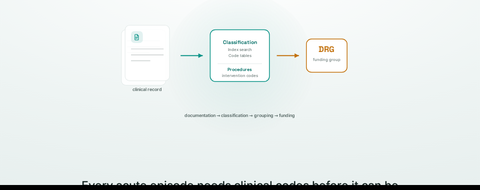
The short version
Related
See clinical coding on a real episode
We’ll walk you through the Code Finder and the autocoder on real clinical data.