One electronic medical record in every care setting Nobody starts again from a faxed summary.
- The whole person in view. Clinicians see each person’s past, present and planned care in one place.
- Deterioration seen early. Named early-warning rules watch the readings and send an abnormal one to the clinician responsible.
- Handovers that leave nothing out. AI drafts them from the whole record, and a clinician reviews and signs every one.
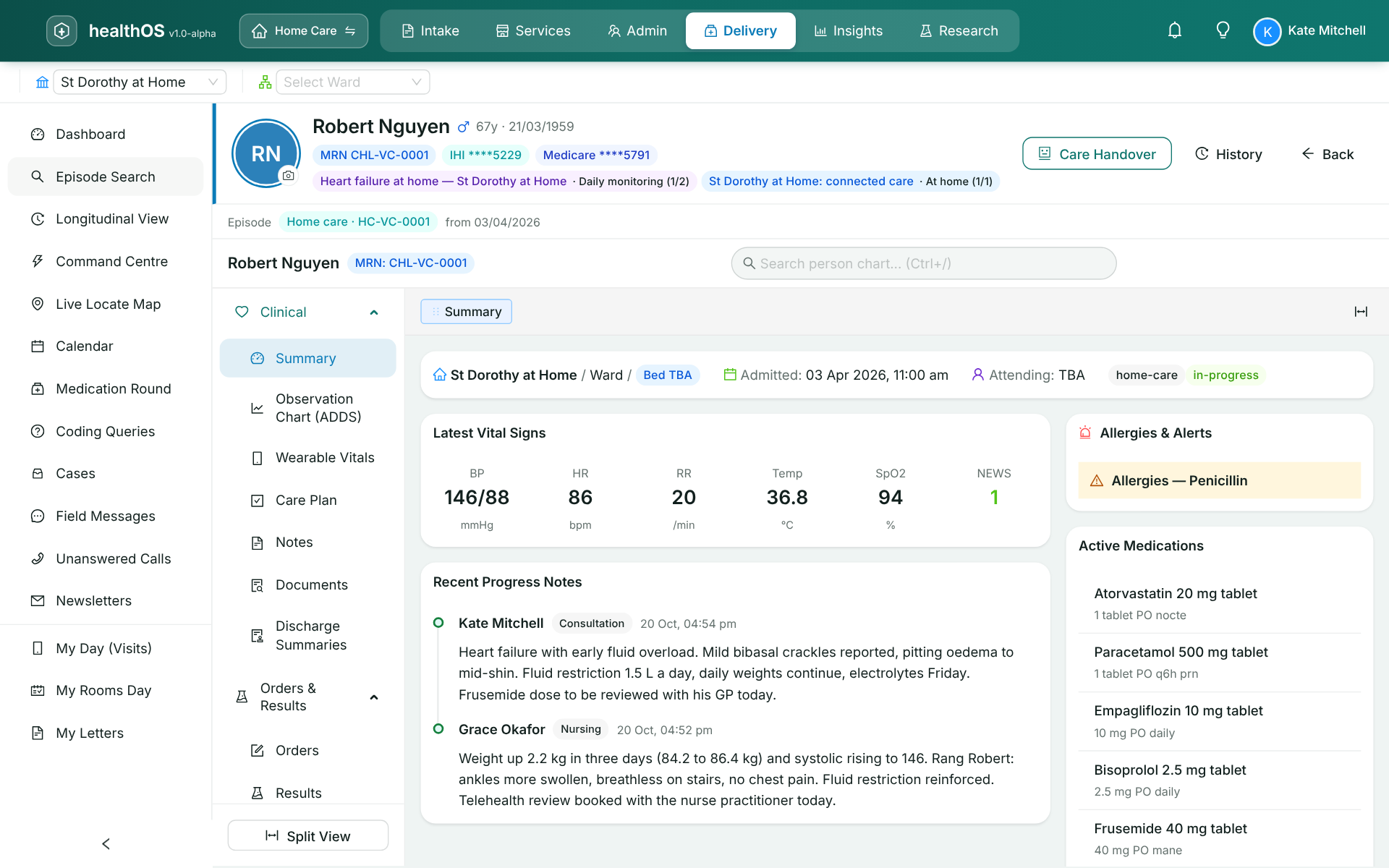
Ward observations on a schedule, and a discharge summary from the whole stay.
The full clinical suite, with each resident’s funding class read every morning.
Each worker’s clients and clinical tasks, on a phone and offline.
Progress notes and care planning for participants.
Safer care, because nothing is missing
The HealthOS electronic medical record runs across hospitals, residential aged care, home care and disability services on one record, so it moves with the person.
Everything tied to the care plan
Every entry links back to the person’s care plan. That covers assessments, care plans, progress notes, medication, wounds, falls, pain, nutrition, continence, restraint, behaviour, infection control, palliative care, allied health and activities, all connected.
- Scored assessment instruments with automated risk flagging
- Structured notes coded to the Australian clinical terminology
- A 7-year audit trail
One medicines list in every setting
One active medication list on the shared record, with interaction, allergy, dose and duplicate checks at the moment of prescribing, and reconciliation drafted when a person moves between settings and confirmed by a clinician.
Everyone sees the same person
Nurses, care staff and the clinical lead work from the same record, wherever the person is cared for.
Deterioration seen early
Observation forms run on the schedule the episode sets, and named early-warning rules watch the readings and send an abnormal one to the clinician responsible.
Handovers that leave nothing out
Handovers and discharge summaries are drafted by AI from the whole record, so they’re complete because the record is. Notes and vitals can be dictated and structured as you speak. A clinician reviews and signs every one.
Keep the clinical systems you already run
The systems around HealthOS can read and write the record through a governed interface, so it works beside what you keep. The detail is for your IT team: clinical terms are coded in the Australian clinical terminology, diagnoses and procedures in Australian diagnosis and procedure codes, and the record is open over the national health data standards, hospital messages and apps that open inside the record.
Before you ask
| Question | Answer |
|---|---|
| Which care settings does the clinical record cover? | Hospitals and day surgeries, residential aged care, home care and Support at Home, and disability services, all on the same person record. |
| Does it connect to My Health Record? | Access to shared health summaries and discharge documents through My Health Record is in development, and the integration application has been submitted. |
| Can it run alongside our existing clinical system? | Yes. HealthOS connects through the national health data standards and hospital messages, so it can share a record with the systems you keep. Nothing has to be replaced all at once. |
| Where does the patient’s administration live? | On the same record. See the patient administration system. |
Related
See your whole patient in one electronic medical record
We will walk you through it on real data. Bring the hardest thing your current system can’t do.