Coded from the episode, and claimed through Eclipse
The coder works on the difference between what the patient arrived with and what the stay added. The claim is then built from the episode that was recorded, and sent in batches you can follow.
The people at this step
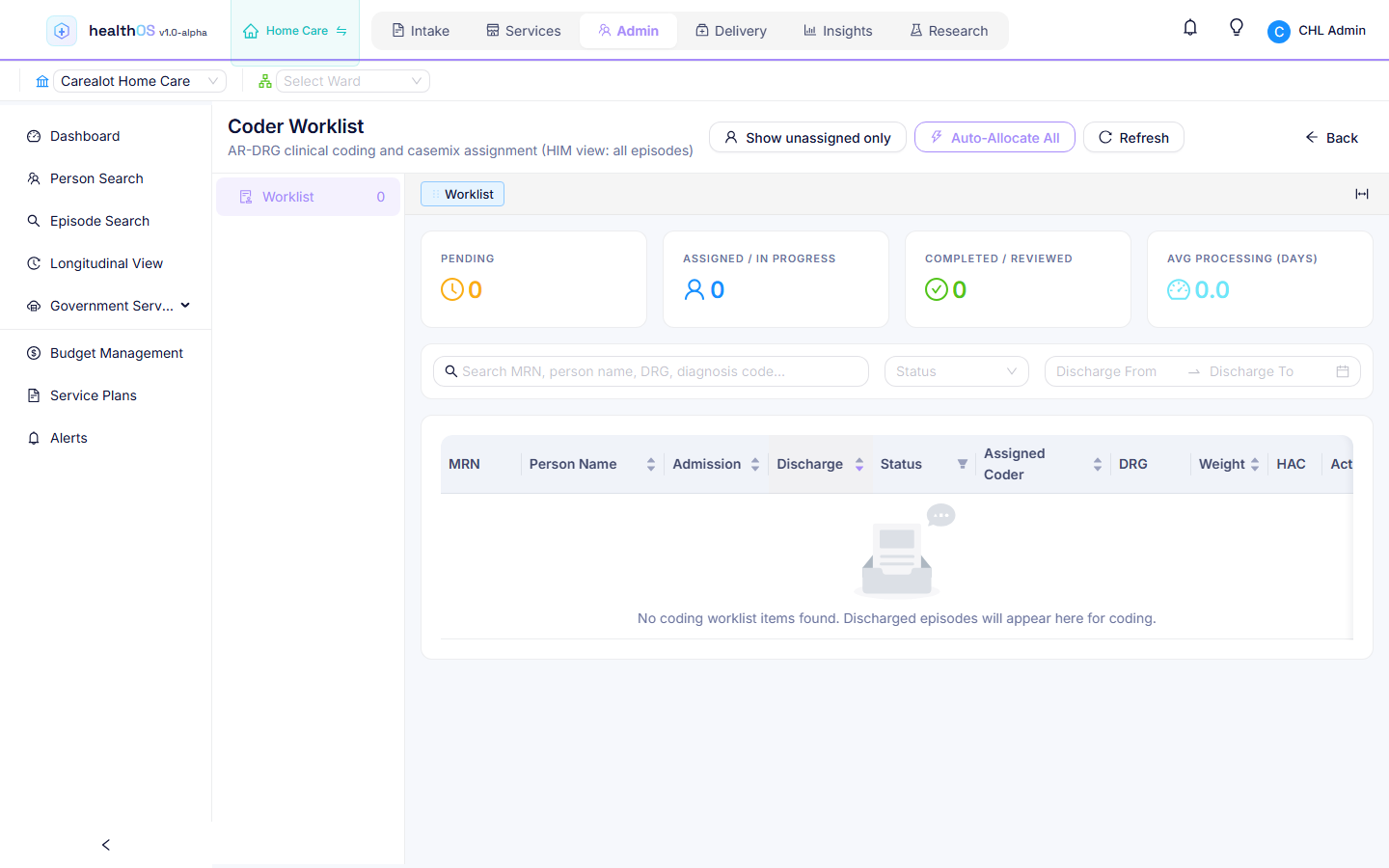
Takes episodes from the worklist and codes them in the Code Navigator, with the autocoder's suggestions traced to the sentence each came from.
Allocates the work, raises coding queries with clinicians and watches what is under query.
Sends the Medicare, DVA and health fund in-hospital claims and reconciles the remittances that pay them.
Step by step
- A baseline at admission
HealthOS holds the pre-admission record, so at admission it freezes what the patient arrived with. Condition onset flags and hospital-acquired complications come out of that comparison.
- Coded, and every code traced
The coder takes codes from the index and the tables, and keeps or rejects what the autocoder proposes.
- Grouped
The DRG moves as each code is taken. Grouping is to MS-DRG today, and to AR-DRG under the official IHACPA specifications once certified.
- The claim
In-hospital claims are built from the episode and sent through Eclipse in batches you can follow. Eclipse is in Notice of Integration testing with Services Australia.
- Paid, and reconciled
Remittances are matched against the claims they pay.
HealthOS Coder covers this step on its own
Start with the coding screen on its own. Code an episode in your browser with the live DRG beside you and an autocoder that cites its sources, with no implementation project. When the rest of the journey comes onto HealthOS, the same coder reads the whole record.
From $79 per coder a month, seven days free.
Where it ends
The episode closes coded and claimed, from the same record the referral opened.
See HealthOS in your hospital setting
We will walk you through it on real data. Bring the hardest thing your current platform can't do.